

Who We Are
What We Do
Community

Rescue helicopters available 24 hours a day, 365 days a year, with a LifeFlight critical care doctor on every mission.
LifeFlight began as a grassroots aeromedical helicopter service and has grown into a vital part of Queensland’s Emergency Helicopter Network (EHN). Under the guidance of Retrieval Services Queensland (RSQ), our dedicated teams respond to emergencies, providing rapid, lifesaving care across the state at no cost to patients. LifeFlight directly services an area of 1.85 million square kilometres. Our crews respond to road, farm and workplace incidents, medical emergencies in regional and remote communities, boating and coastal incidents and searches for people lost at sea or in bushland, and transfer patients between regional and major hospitals.
Every gift supports improvements to equipment, doctor training and free community trauma training.
Donate now or become a volunteer.
Rescue helicopters have a mix of flight, rescue and medical staff, and each crew member has a defined job:
Who supports the pilot with mission coordination, navigation, communications and cockpit duties, and operates the hoist to lower and retrieve doctors, paramedics, rescue personnel and equipment when there is no safe place to land
Who supports complex rescues in difficult, remote and offshore environments. They may be winched down to reach patients, assist the doctor and paramedic at the scene, manage rescue equipment and help safely recover patients and crew. Rescue Crew Officers are also trained rescue swimmers for marine and flood rescues
A specialist in emergency, intensive care or anaesthetics, who can administer blood, anaesthetise and ventilate a patient at the scene
Behind every crew are the LifeFlight engineers who maintain the fleet in-house, the Communications, Coordination and Control Centre that coordinates every mission, and the LifeFlight Training Academy, which trains more than 1,500 aviation and medical professionals each year, including our own team.
LifeFlight’s rescue fleet flies the Leonardo AW139, a twin-engine aeromedical helicopter with a rescue hoist and a range of 895 km. One AW139 is specially contracted to support major gas companies, while the remainder of our fleet are on call for LifeFlight’s diverse operational needs. Every rescue helicopter is maintained in-house by LifeFlight engineers at the LifeFlight Clive Berghofer Maintenance Centre at Archerfield, a Leonardo Authorised Service Centre.
Our crews also support search and rescue across 53 million square kilometres of land and sea for the Australian Maritime Safety Authority (AMSA) and the Queensland Police Service.
LifeFlight also provides contracted helicopter services to government agencies, maritime authorities and offshore and mining operators.
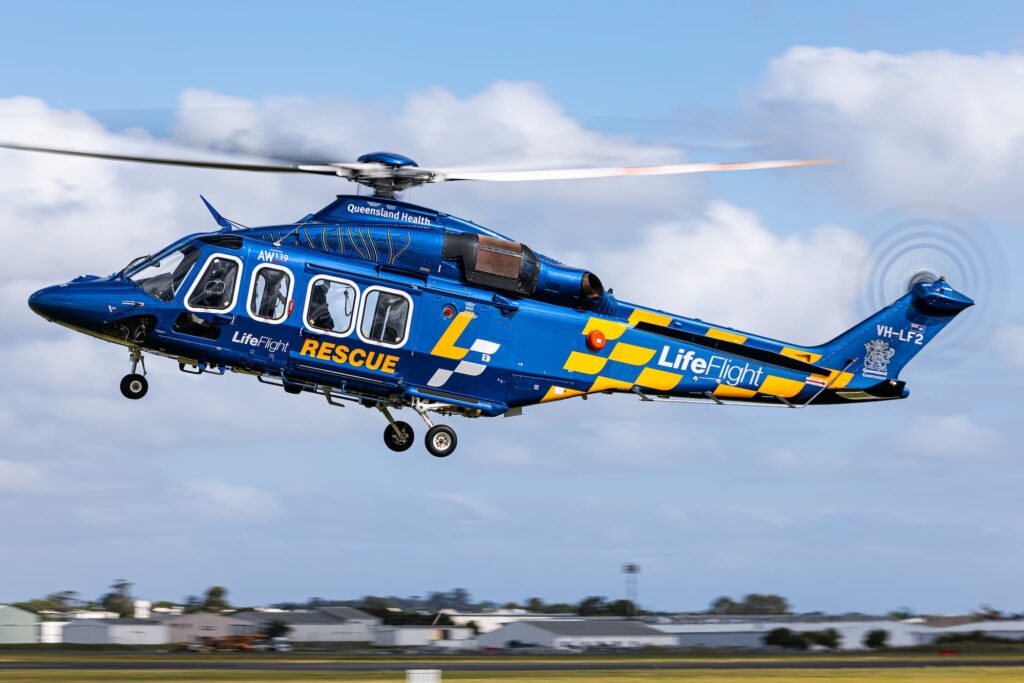
LifeFlight rescue helicopters fly from Brisbane, Bundaberg, Mount Isa, Roma, the Sunshine Coast and Toowoomba. LifeFlight critical care doctors also fly with the local aeromedical services in Cairns, Mackay and Rockhampton.
Each region has its own volunteers, events and Community Leaders: Wide Bay-Burnett, Sunshine Coast and South Burnett, South West, Brisbane, Gold Coast, Darling Downs and North Queensland.
In 2024, the Queensland Government made a 10-year commitment to our rescue helicopter service, ensuring we continue providing world-class health care at no cost to the patient.
This funding enables crucial helicopter upgrades, better facilities and more personnel, giving Queenslanders, especially in regional and remote areas, confidence that we’ll be there when needed.
LifeFlight is a proud partner of the Queensland Government, who keep our helicopters in the air, but it’s the generosity of our community that allows us to invest further in vital programs, equipment, training, and infrastructure that supports our crews in delivering the highest standard of care for our patients and their families across Queensland.
LifeFlight maintains a comprehensive suite of accreditations, approvals and certifications, reflecting our commitment to safety, quality and clinical excellence.
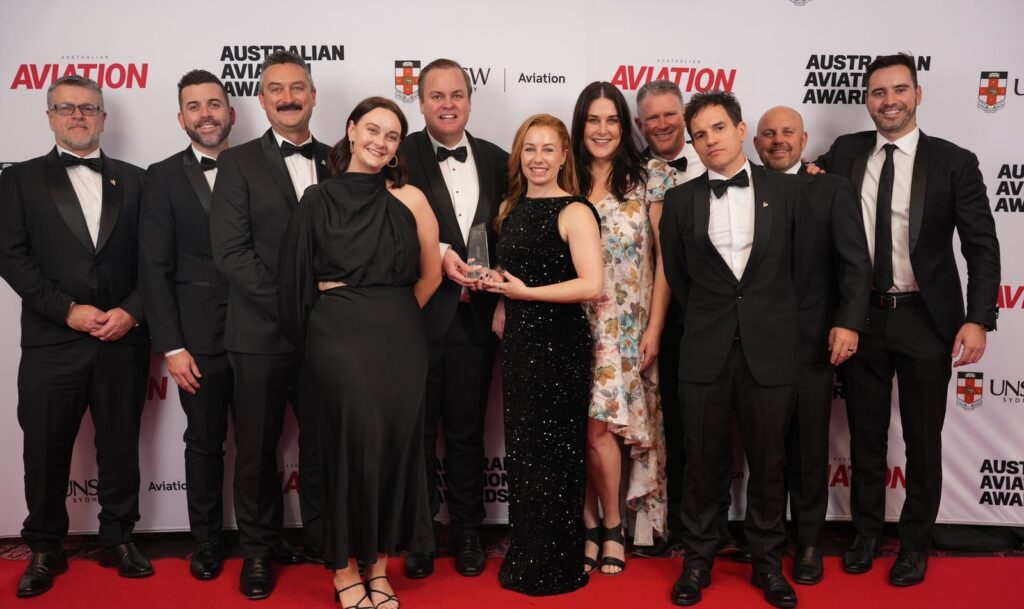
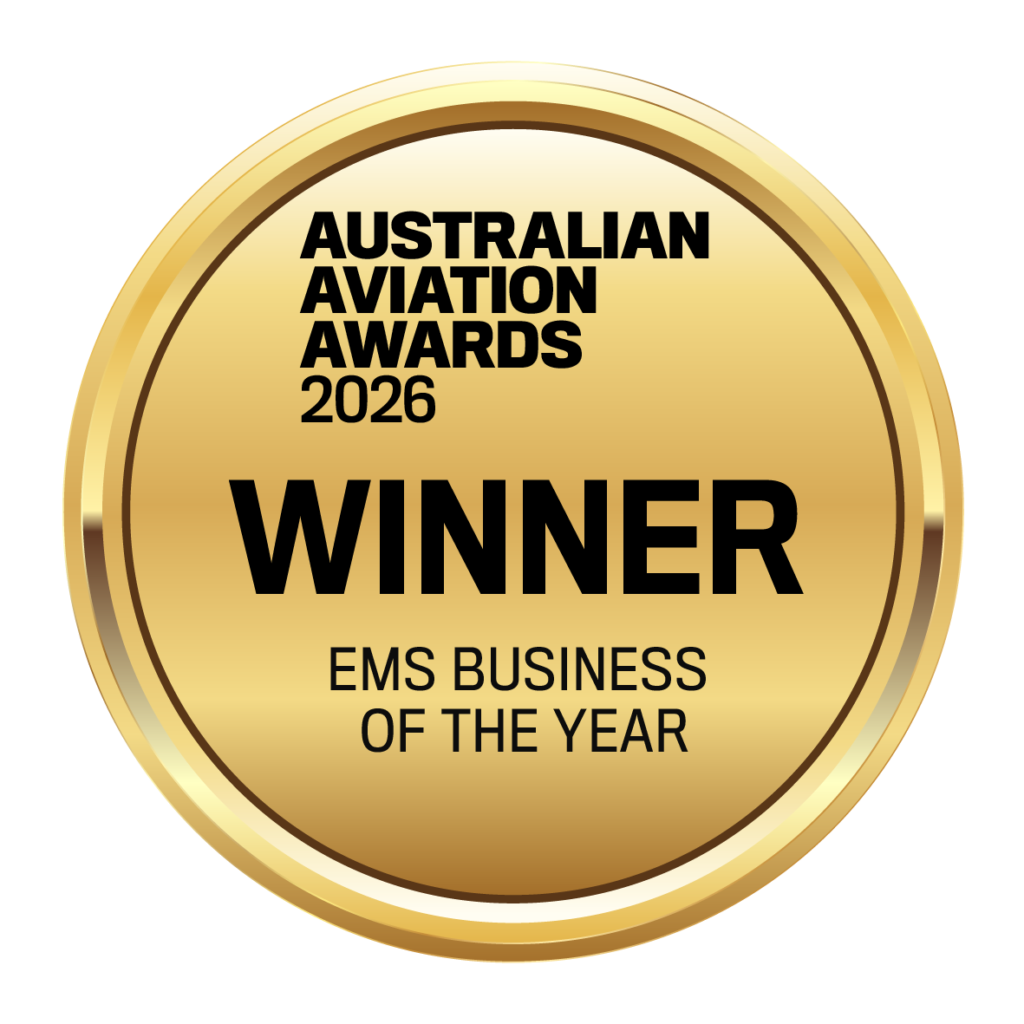
Our aeromedical service has also been recognised by Australian Aviation, receiving the Emergency Medical Service (EMS) Business of the Year award for three consecutive years from 2024 to 2026. The award acknowledges LifeFlight’s operational excellence, innovation and impact in delivering critical care to communities across Queensland and beyond.
Every gift supports improvements to equipment, doctor training and free community trauma training. Donate now or become a volunteer in your region.
What the first person at the scene does can often make all the difference for the patient’s outcome when our crews land at the scene. First Minutes Matter is LifeFlight’s free emergency trauma training, led by experienced LifeFlight educators. Choose the First Minutes Matter training that’s right for you.

You don’t call LifeFlight directly. In an emergency, call Triple Zero (000). Retrieval Services Queensland (RSQ) decides when a helicopter is needed and manages deployment.
No. A LifeFlight retrieval is at no cost to the patient.
A pilot, aircrew officer, rescue crew officer, LifeFlight critical care doctor and a Queensland Ambulance Service flight paramedic or a LifeFlight flight nurse, with a co-pilot on some missions. Crew vary by mission. The critical care doctor can administer blood, anaesthetise and ventilate a patient at the scene.
The AW139 has a range of 895 km before needing to refuel, and crews regularly fly missions of hundreds of kilometres to reach remote properties.
Crews can land on highways, paddocks, beaches and school ovals, and where there is no safe landing site, the Aircrew Officer operates the hoist to lower the doctor or paramedic down to the patient. Pilots make the final call on landing sites and safety based on terrain, power lines and light.
No. LifeFlight is a not-for-profit organisation that has been saving lives since 1979. Our rescue helicopters are tasked by Retrieval Services Queensland as part of Queensland’s Emergency Helicopter Network.
LifeFlight’s rotary-wing rescue helicopters respond to emergencies in Queensland through Triple Zero (000) and RSQ, at no cost to the patient. Our air ambulance jets fly planned domestic and international medical repatriation missions arranged directly by LifeFlight. Both fly with a LifeFlight critical care doctor.
Donate now, become a regular giver, leave a gift in your Will, host a fundraising event, attend an event or become a volunteer. Every gift supports improvements to equipment, doctor training and free community trauma training.
In an emergency, always call Triple Zero (000).
Every gift supports improvements to equipment, doctor training and free community trauma training.
Donate now or become a volunteer