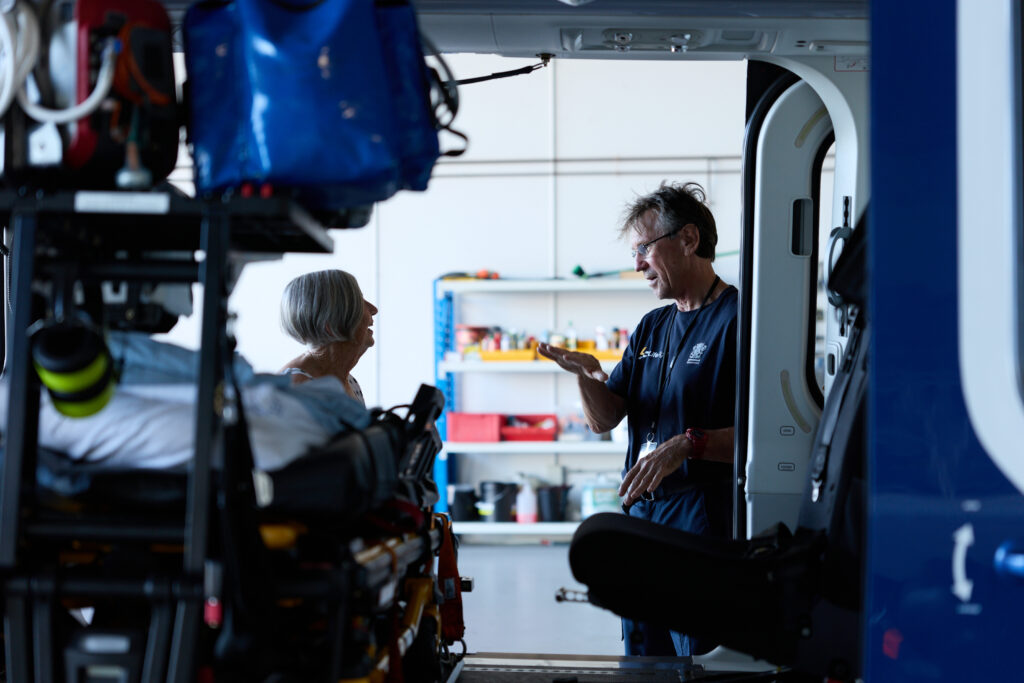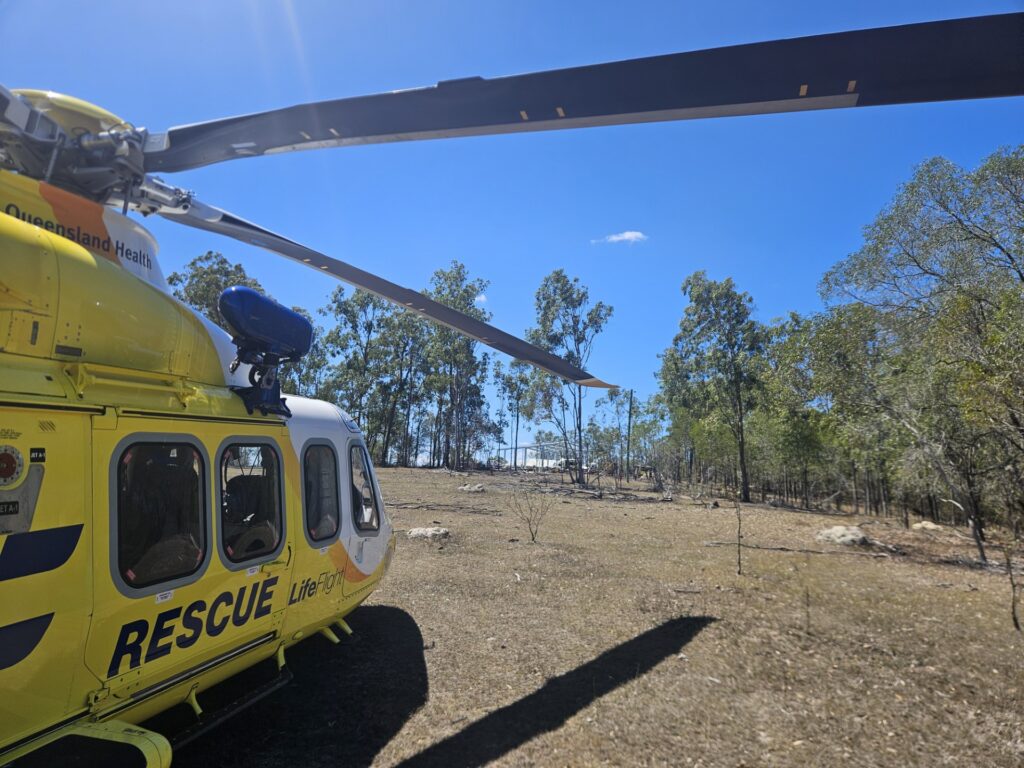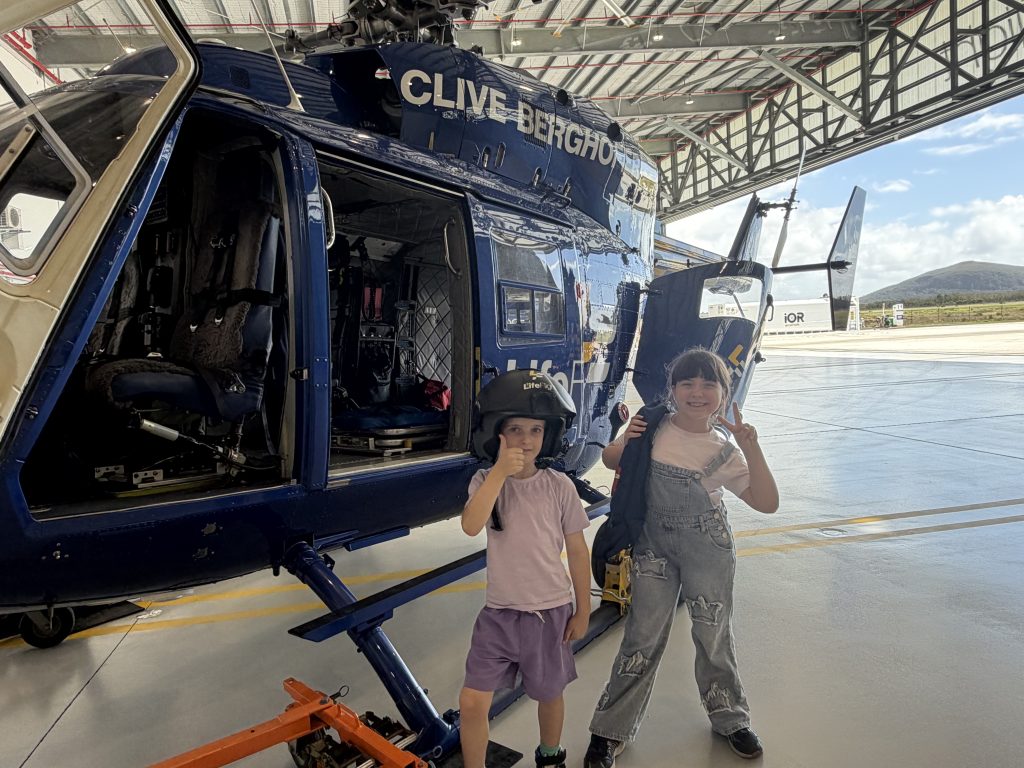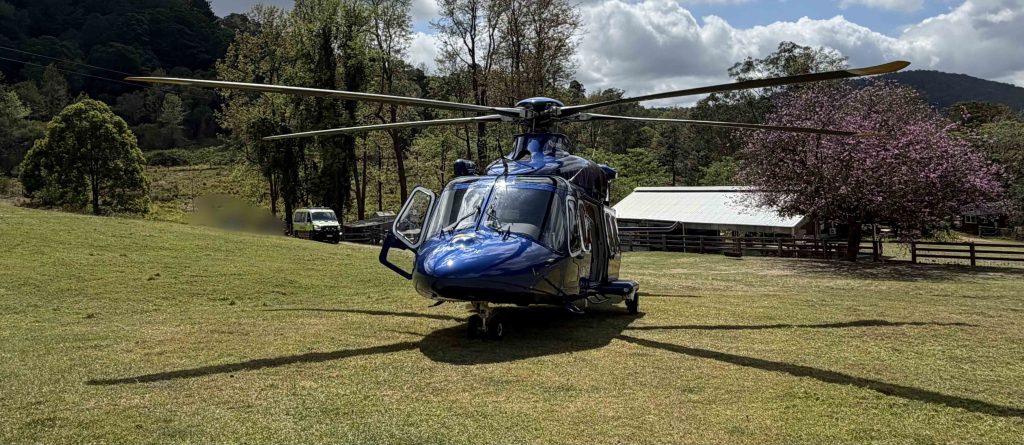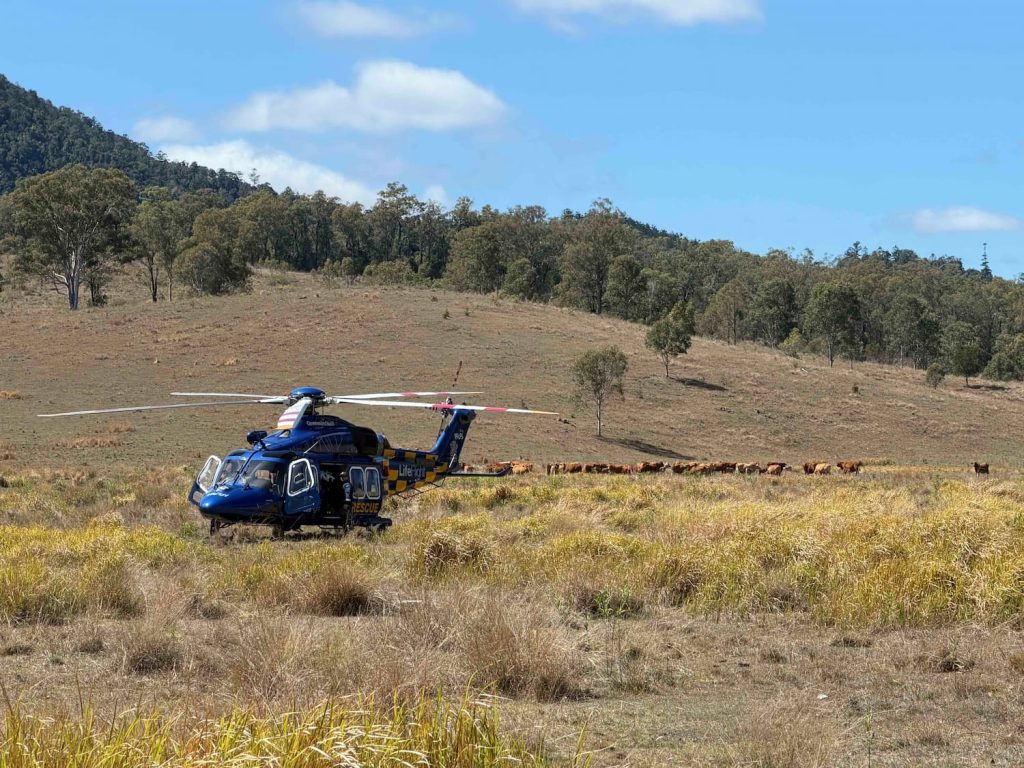




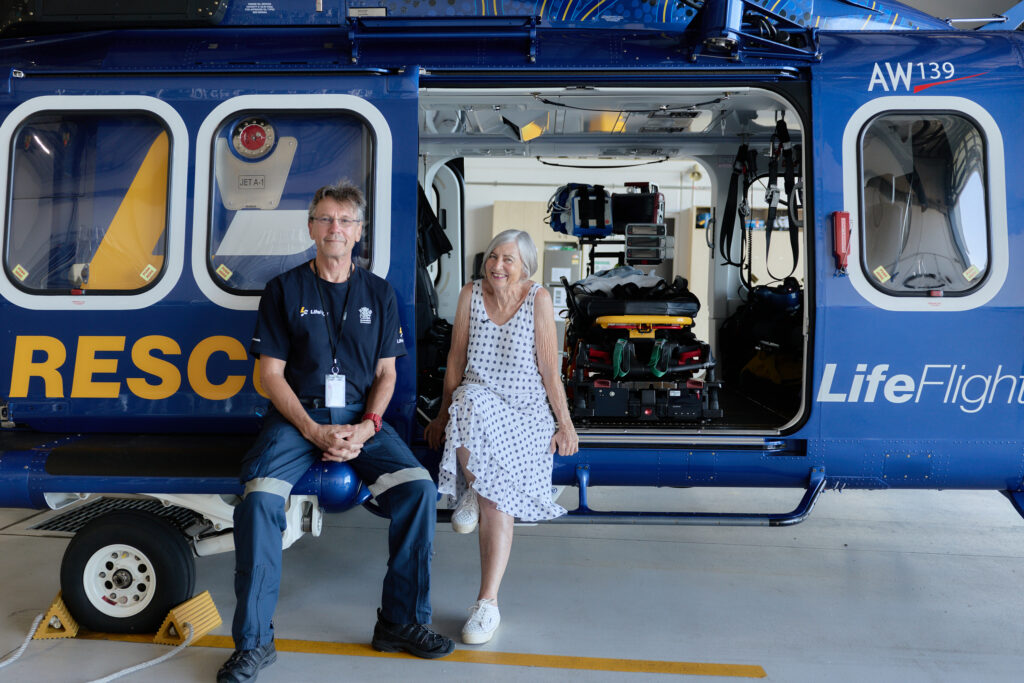
A Bundaberg retiree has been reunited with the LifeFlight pilot who reversed a helicopter into a rocky Mount Walsh ravine to winch her to safety.
Tony Miller has been in the cockpit for 40 years and said the 100-foot winch rescue of Suzanne Tobin in May last year was complex.
“It was up there with one of the most challenging land missions I’ve ever had,” he said.
Tony flew the chopper alongside the mountain and then relying on his crew backed it in to rescue Suzanne, 65, who had fallen and badly damaged her knee.
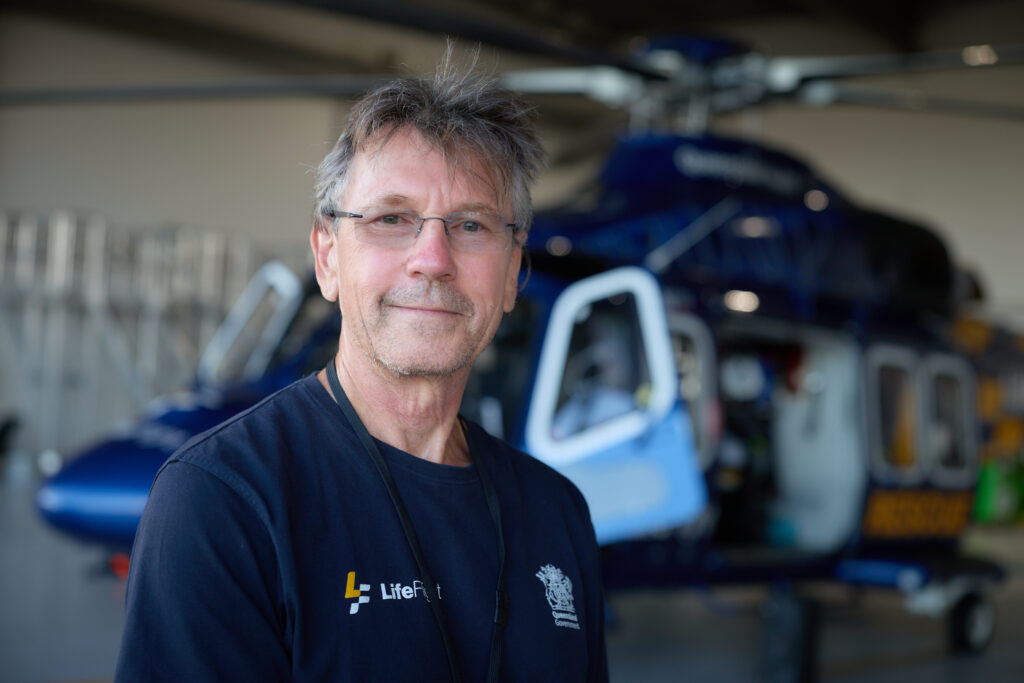
“The whole thing was just unbelievable,” Suzanne told her rescue pilot.
Suzanne was one hour into a difficult bushwalk, clambering over slippery rocks with a local walking group on Mother’s Day when she slipped and became wedged in a crevice.
“It was very, very rocky terrain through a creek gorge over boulders,” Suzanne said.
“You had to hold onto trees at different points and anchor yourself with all four limbs and I just lost my footing and fell back.
“I only fell a metre but unfortunately, my body twisted, and I felt my leg go and I knew I had done some serious damage because I heard it break.”
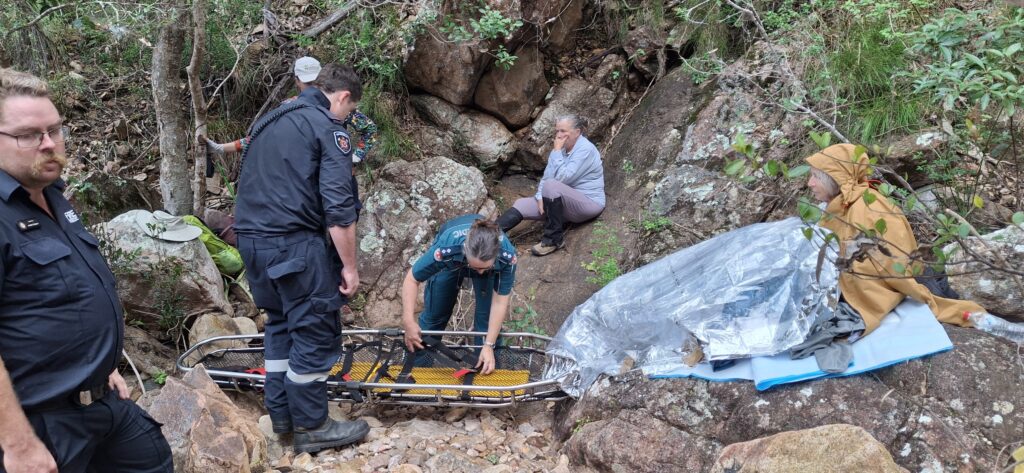
A Biggenden Queensland Ambulance Service (QAS) paramedic who hiked into the scene to treat Suzanne and provide intravenous pain relief soon realised the only way to get her out safely was by helicopter.
Queensland Fire Department (QFD) firefighters and other bushwalkers helped the QAS paramedic carry Suzanne on a stretcher, forcing their way through dense bushland by breaking branches and pushing saplings over to clear a pathway to reach a safer winching site.
The slopy, rocky surface was too slippery to walk Suzanne out. Her ground rescuers tried by putting her on a stretcher, but the bush was too thick to make that work.
Suzanne said the LifeFlight crew juggled wind and rain, poor visibility from low cloud cover and dense foliage to winch a medical team down to her to give her stronger pain relief and winch her to safety.
“I will be forever grateful to LifeFlight,” she said.
Pilot Tony Miller said it was quite a challenge to even find her on the ground in the first place because of very rugged, steep and dense vegetation.
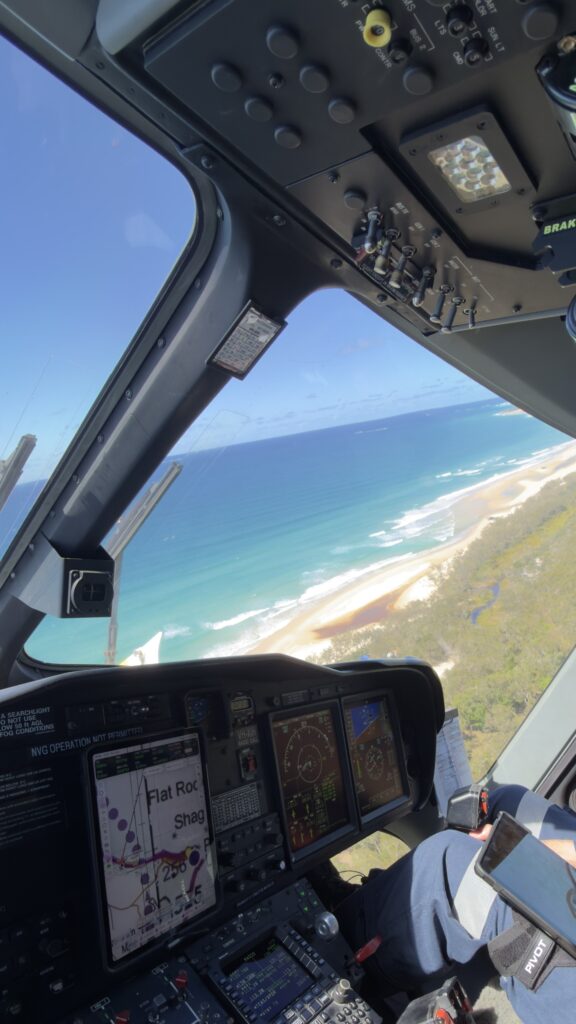
“We basically had to really hug the mountain, get down in the tree line, down into the ravine, and then back into the mountain,” Tony said.
“It’s routine stuff. It’s nothing we should not be overly challenged with. But you know, it was a high degree of difficulty for sure. And very little room for error. Very tight margins.
“I had to go around and fly along the side of the mountain and then turn and then back into it a little. It just happened to be one of those ones that tested all our skills.
“That was the constant dynamic, ongoing process. You know watching the fuel gauges go down, watching the clouds come down, watching the showers come in.
“That was constantly making me think ahead. What’s it going to be doing in the next two minutes? The next five minutes. The next half an hour. It was committing the aircraft into a very tight spot with ravines and high trees, dense vegetation.
“I’ve done plenty of stuff in my time. But this one, because of the weather, because of the time, the fuel flow, the difficulties the team on the ground had with communications, line of sight and all that stuff. It was up there with one of the most challenging land missions I’ve ever had.”
Tony said it was a pleasure to meet Suzanne.
“That was great,” Tony said after the reunion.
“And you know, she was obviously very, very grateful that we were able to do our job well, you know, so it was quite rewarding.”