



In April and early May, LifeFlight completed two patient repatriations that circled the globe and demonstrated the strength of the Challenger 604 platform operating out of Australia and Singapore.
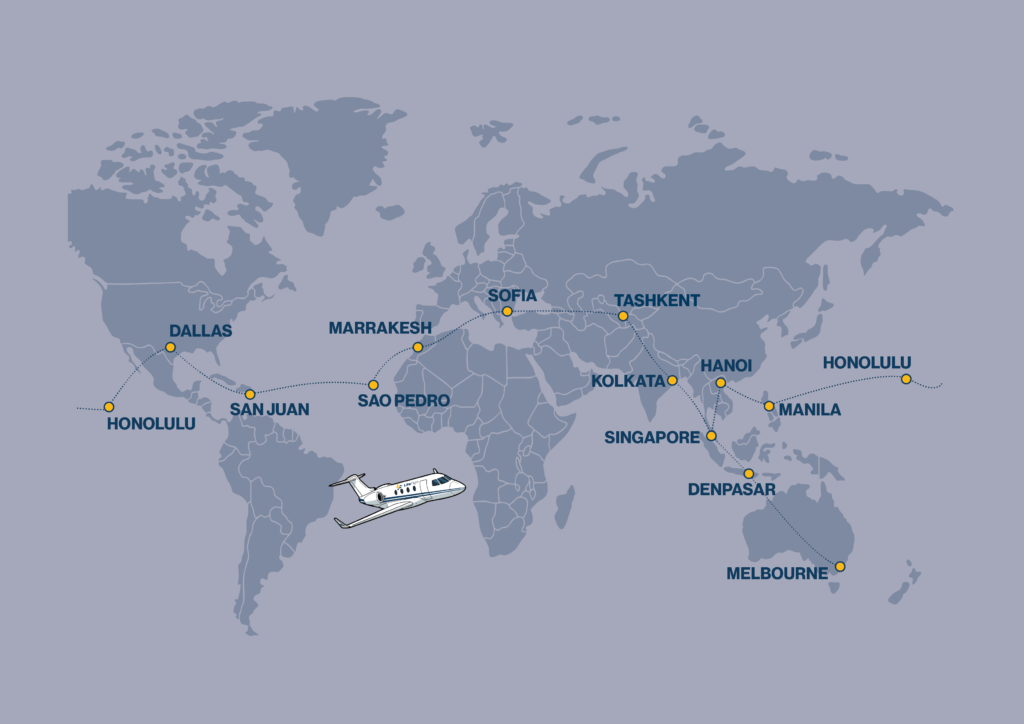
The repatriations were carried out as one continuous mission across 16 ports, 12 countries, and clocking up approximately 90 flight hours. What could have been two independent long-range operations was rolled into one movement that circled the globe.
The missions
The first mission involved a Challenger 604 flying out of Singapore to airlift a man in his 80s with heart failure and pneumonia from Hanoi to Honolulu.
The patient was transferred to the air ambulance at Hanoi following handover from the local hospital and flown via Manila and Guam to the Tripler Army Medical Centre in Honolulu 22 hours after leaving Singapore.
LifeFlight accepted a second task while the Honolulu mission was underway to airlift a young adult male recovering from significant trauma from Marrakesh to Melbourne.
Instead of flying back to Singapore, the aircraft flew from Honolulu via Dallas, San Juan and São Vicente (Cape Verde) to Marrakesh. The Middle East conflict zone and its associated closures and diversions were avoided by transiting through Sofia, Tashkent and Kolkata.
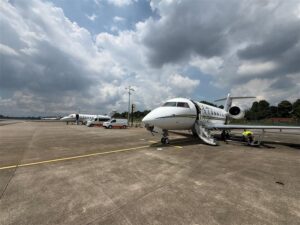
For the final leg, a second Challenger 604 flew out of Australia to Singapore, ensuring a wing-to-wing handover and fresh crew in place for the final leg to The Alfred in Melbourne via Bali.
Operations
There were multiple operational features that contributed to the success of these missions.
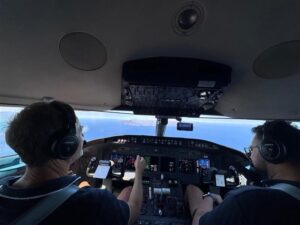
They included multiple crew rotations executed at Manila, Singapore and Tashkent , which enabled a continuous flight pattern without compromising crew duty limits. The crew change at Manila during the refuel enabled a second medical and pilot team to fly the aircraft on to its destination in the Pacific while the first team rested. The Hanoi to Honolulu mission also benefited from LifeFlight’s deep understanding of the Pacific operating environment due to decades of experience working with ground handling agents and government authorities, ensuring smooth operations.
“Missions like these reflect not just the capabilities of the Challenger 604 platform, but the depth and reliability of our crews.”
-Tyson Smith, General Manager – Air Ambulance
Medical support
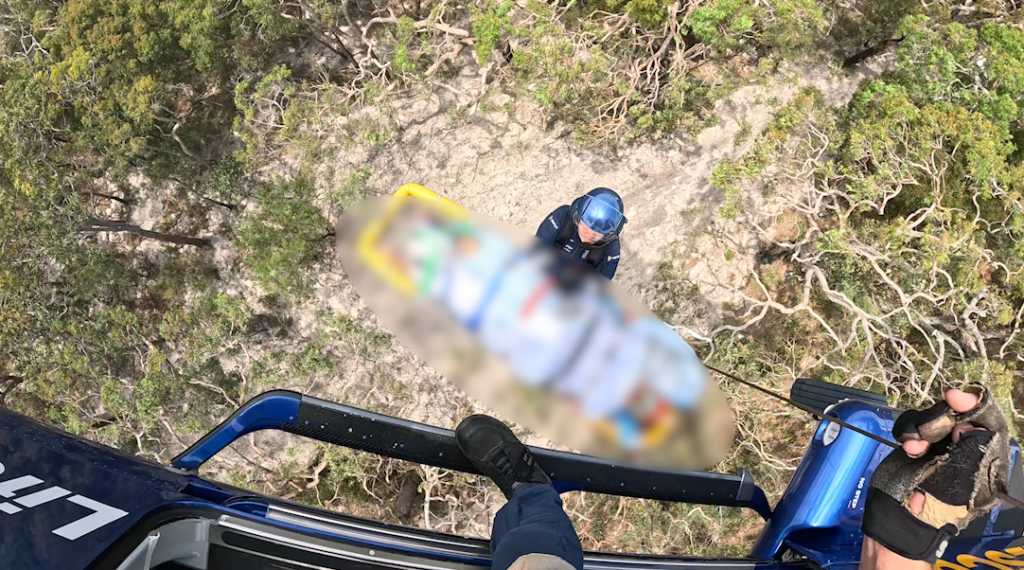
LifeFlight’s medical teams provided expert care for the two patients and their distinct clinical issues, including an elderly patient with heart failure and pneumonia and a young adult in post-extubation recovery from significant trauma.
Following handover from the treating hospital in Hanoi, the team maintained supplemental oxygen and continuous cardiac monitoring for the patient across the Pacific legs.
In Marrakesh, the patient who had been intubated post-injury was extubated by the time the medical team arrived. The team engaged and coordinated with the local hospital’s clinician at the patient’s bedside before transferring the patient to the aircraft and flying him in a stable condition to Melbourne.
Both patients were handed over to the medical centres in Melbourne and Honolulu with no in-flight deterioration.
Final thoughts
Missions like these reflect not just the capabilities of the Challenger 604 platform, but the depth and reliability of our crews.
LifeFlight’s air ambulance was able to accept a second tasking to Marrakesh after touching down in Honolulu and a second Challenger 604 was positioned when it arrived back in Singapore for the final legs back to Melbourne.
LifeFlight’s operation showcased the strength of having one fleet operating from multiple bases in Australia and Singapore to deliver the highest standards of aeromedical retrieval in a tight time frame.