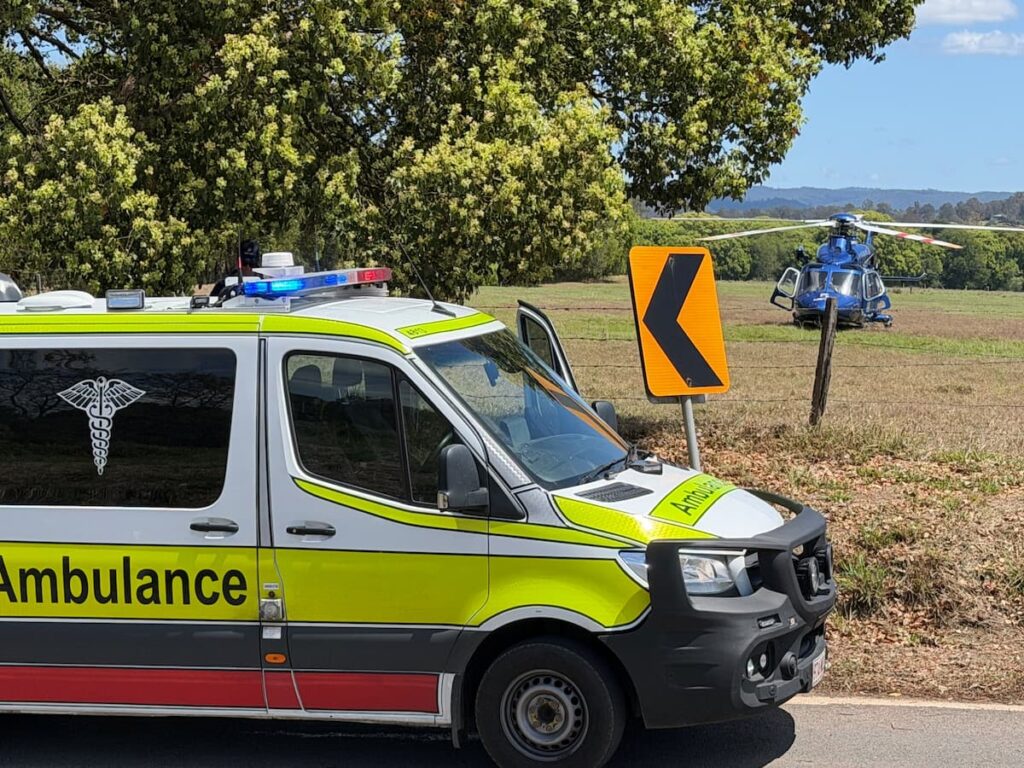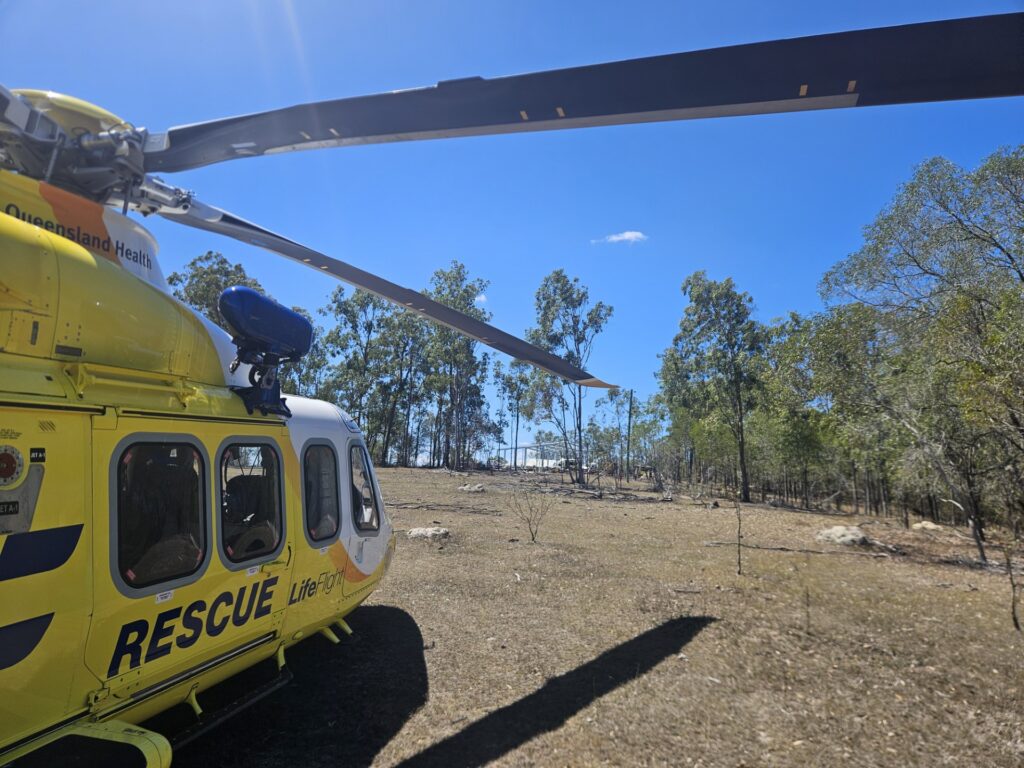




It took only seconds for Queensland farmer Clive Weier to lose his arm in an auger, and a split-second reaction from his neighbour to save his life.
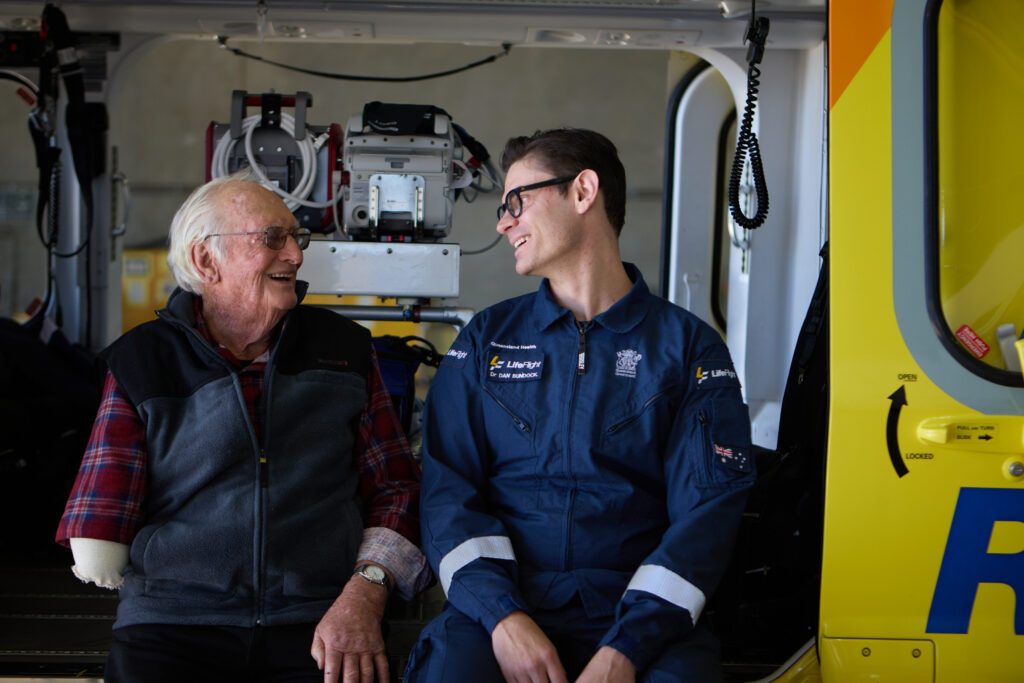
LifeFlight Critical Care Doctor Daniel Bundock recently caught up with Clive at the Toowoomba base.
He told the grateful 89-year-old that his neighbour’s quick-thinking just over a year ago was life-changing.
“In an emergency, every second counts,” Dr Bundock told Clive. “I’ve seen life and limb altered by bystanders who knew what to do.”
Graham Terry was helping his mate clean oats – something Clive had done hundreds of times before without incident. Clive’s hand suddenly got stuck in the machine.
“I clamped my hands around his arms,” Graham said. “Clive’s son Leigh called Triple Zero (000) and we put a torniquet on. We reassured him, he was going to be okay. I couldn’t do anything to stop the pain; I could only stop the bleeding.”
Doctor Bundock told Clive that he would have done exactly the same thing if he’d been first on the scene.
“What Clive’s son and neighbour did saved his life, undisputably,” Dr Bundock said.
“I suppose that’s why we have the First Minutes Matter program, the first minutes do matter.
“When we arrive on scene to a trauma case, we bring a skillset, we bring blood, we bring equipment, but most of the time we are bringing a knowledge and appreciation that doing the basics properly is the thing that saves a patient’s life.
“They had good knowledge of early trauma principles and knew to apply direct pressure to stop his hemorrhage.
“Clive’s neighbour put two hands around his upper limb and compressed as hard as he could.
“Clive’s a pretty lucky man. He’s lucky because of where the injury was, he’s lucky because of the type of injury he had but he’s also lucky because the people around him had knowledge of the basic principles of trauma care.
“Their ability to think clearly in that minute and step up when they were needed is why Clive’s back on the farm today.”
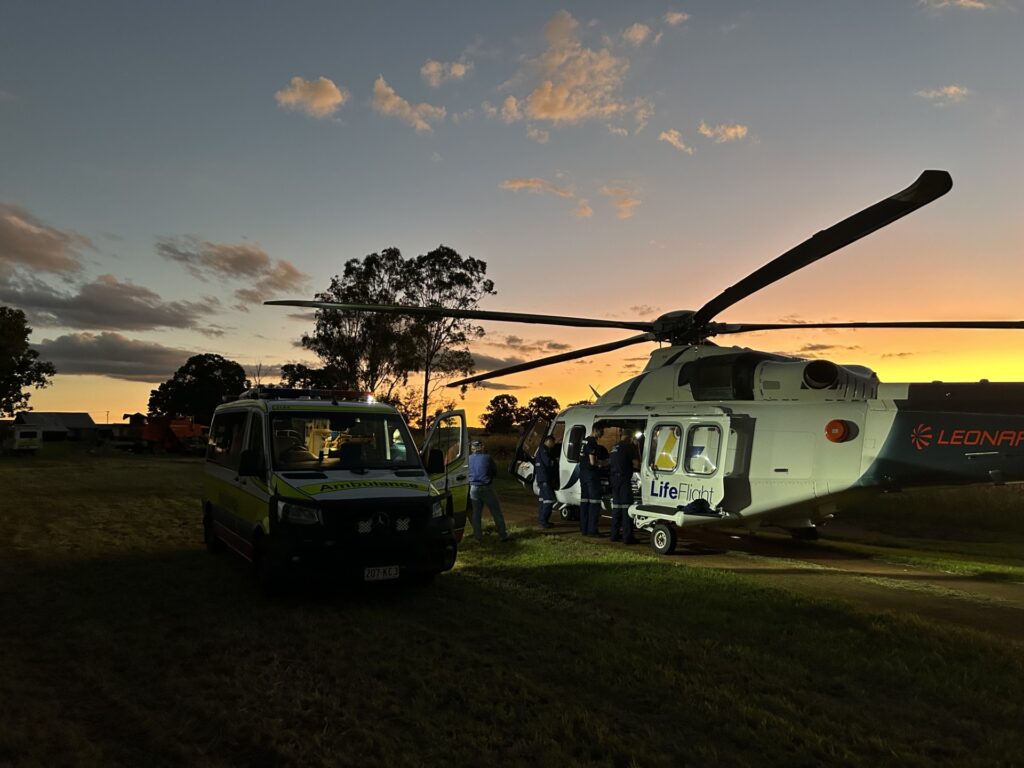
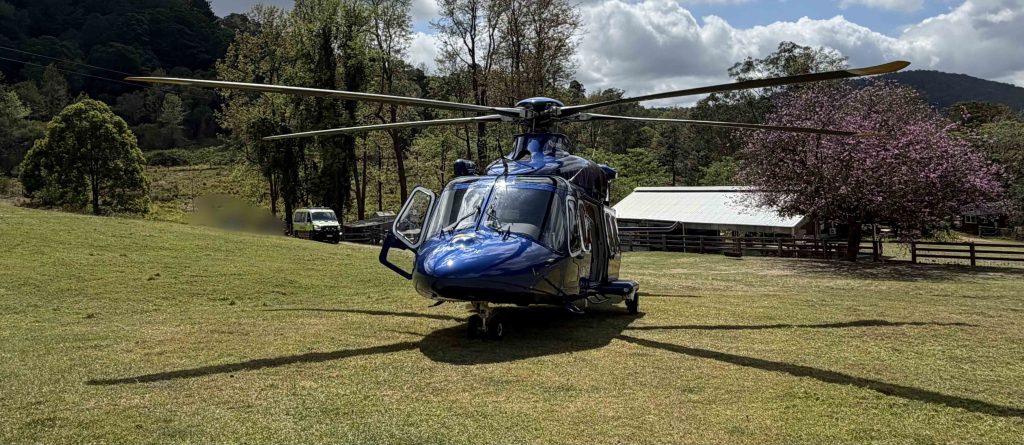
Doctor Bundock intubated Clive at the edge of his paddock and looked past Clive’s feet as the sun set over his Mondure property.
“Clive’s clearly a resilient man,” Dr Bundock said. “I met him on probably the worst day of his life, and he said to me: ‘I’ve had a shit of a day’.
“You’d be surprised at the incredible resilience of people. They just seem to want to get back up always. They have this eternal optimism that everything’s going to be okay and that they’ll find a way forward.”
Clive recently celebrated his 89th birthday and has gone from being right-handed to embracing a ‘she’ll be right’ attitude using just his left hand.
“I don’t know whether I was in shock, but I had one idea, I wasn’t going to pass out, I never passed out,” Clive said.
“I woke up and thought, ‘well – I’ve got to move on. I can’t bury my head in the sand and think I can’t do this and I can’t do that. I’ve got to think positive and I’ve got to get on with my life. It’s happened. It’s history. There’s nothing I can do about it’.”
“I had to learn how to boil the kettle, I had to learn to do some toast, I had to learn to butter it and put my Vegemite on. I can dress myself; I can put my boots on. I can get up and feed my chooks and collect my eggs. I can drive my ute.”
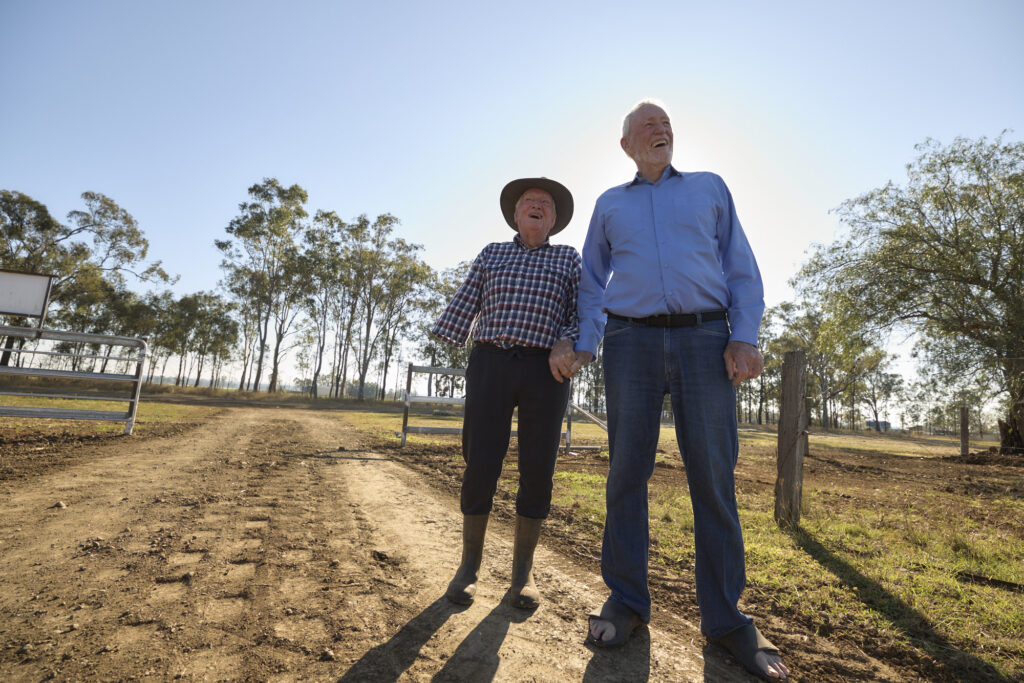
Clive was so grateful that good trauma knowledge saved his life, he organised a First Minutes Matter workshop for the Mondure community and said his community is keen to attend a workshop every two years.
Dr Bundock, who also works in a hospital emergency department, said people who call regional and rural Queensland home need to invest in learning live-saving skills.
“These people work around heavy machinery and animals that can be untamed and accept the dangers and risk that come with that,” Dr Bundock said.
“With that risk, comes a responsibility to yourself and other people who live in your community.
“We are trained to be calm in those moments, but calmness comes from a skillset that you know that you have.
“And people in the community can develop a skillset as well by attending courses, thinking about trauma care, and learning how to use equipment and the basic principles of it.
“When you’re not helpless, when you can do something about it, that gives you a sense of relaxation.”
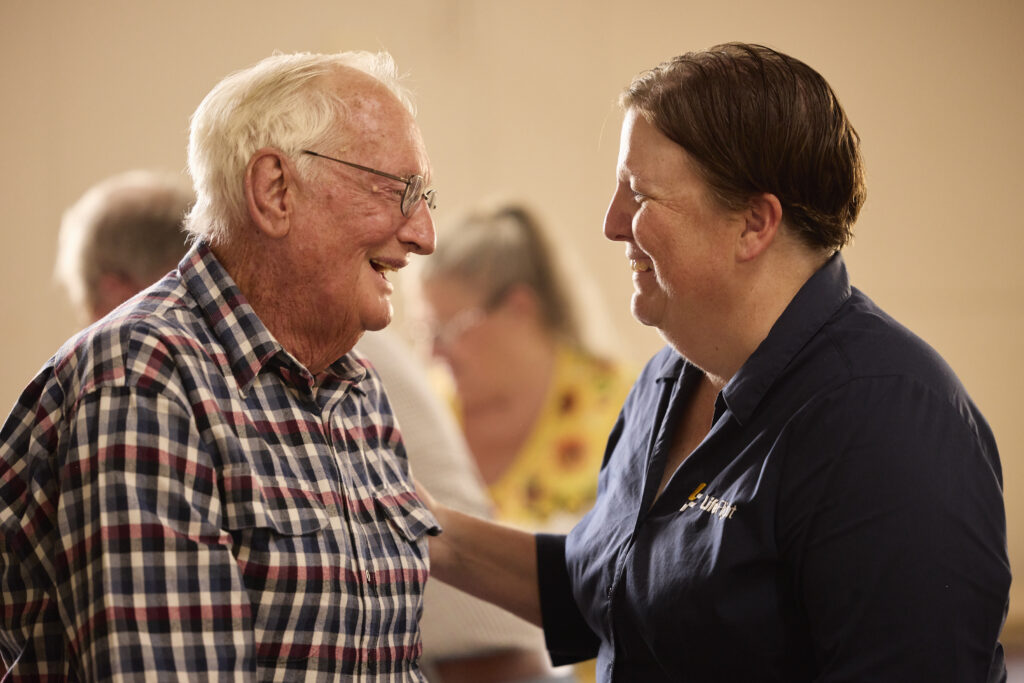
Dr Bundock said seeing Clive looking so well was a real highlight.
“Doctors are people too,” Dr Bundock said. “We carry a bag of patients around in our heads our entire lives. You want to know that they’re doing well.”
Clive said getting to shake Dan’s hand, was unexpected.
“To shake hands with Dan from LifeFlight, I can’t believe it,” he said. “It was special – it was.
“It was unreal what LifeFlight’s done for me. I really appreciated it. I think without LifeFlight I wouldn’t be here.”