



Key Stats Toowoomba/Roma: 2025
- People helped in Toowoomba – 960 (up 6%)
- People helped in Roma – 100 (up 69.4%)
- 1,536 flying hours – Toowoomba/Roma (up 5%)
- 1,043 missions – Toowoomba/Roma (up 0.3% – includes training)
- 8,838 people helped across the LifeFlight network (up 4.2%)
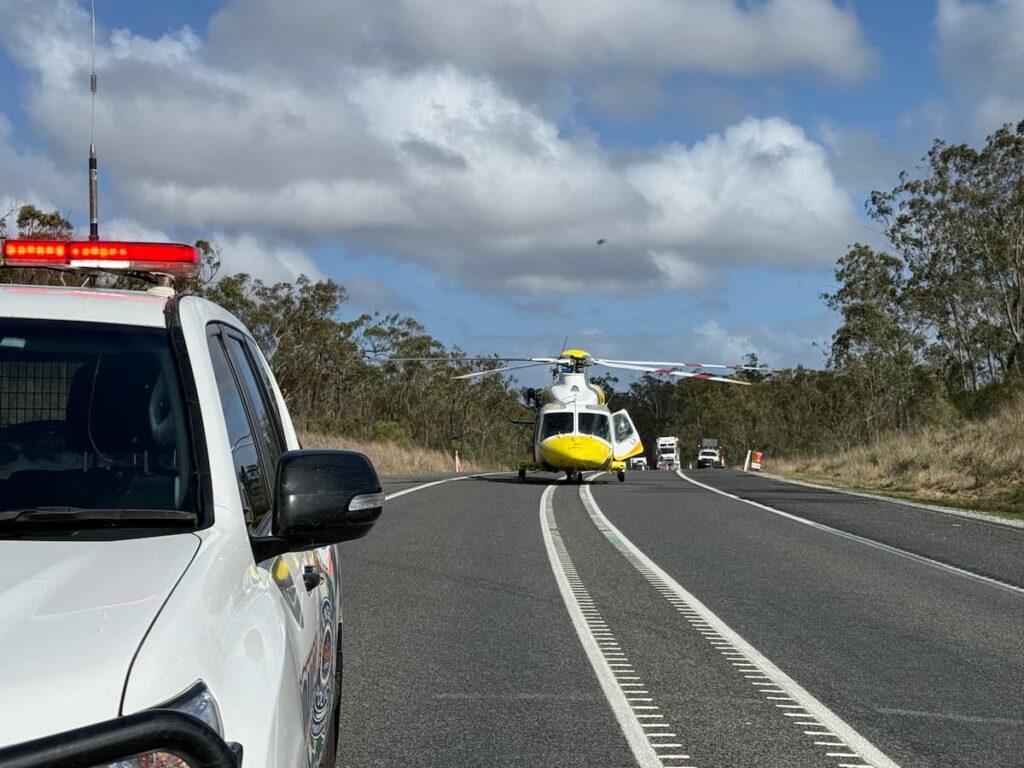
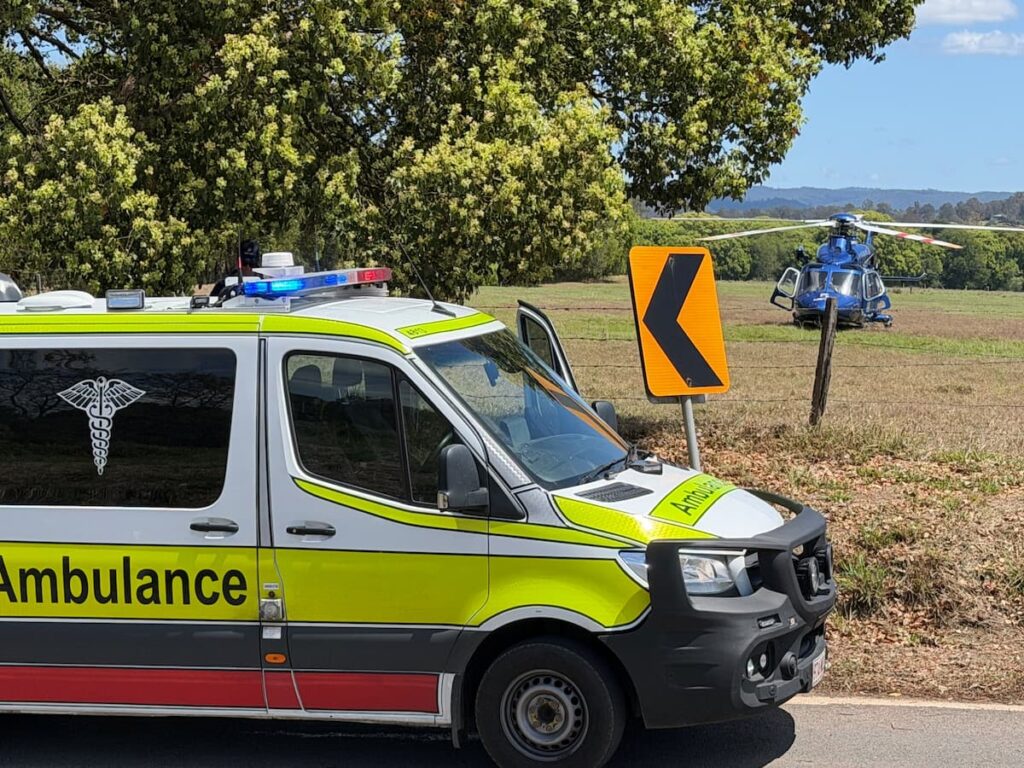
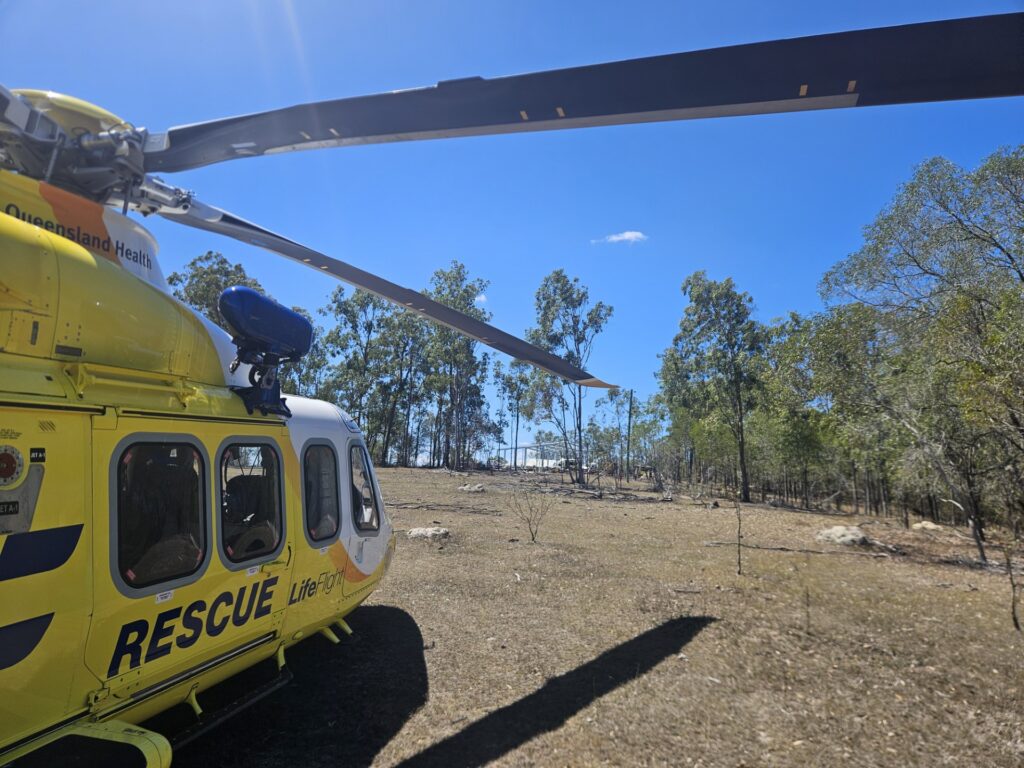
The Toowoomba-based LifeFlight aeromedical crew airlifted close to 1,000 people in 2025, including stranded mountain climbers, injured motorists and people hurt in farming accidents.
The crew airlifted 960 people, up 6 per cent on the previous year.
Meanwhile, the LifeFlight Surat Gas Aeromedical Service helicopter, based at the LifeFlight Lee Family and Australian Country Choice Centre in Roma, airlifted an extraordinary 69.4 per cent more patients than 2024, helping 100 people in the Maranoa region alone.
Both helicopters helped a combined 10 per cent more patients across the 12 months, clocked up 1,536 flying hours and completed 1,043 missions.
Those airlifted with trauma-related injuries rose 6.6 per cent to 225, people with cardiac issues increased 9 per cent to 108 and patients injured by animals grew 8 per cent to 39.
The Toowoomba and Roma crews contributed to another overall record year for the aeromedical organisation, with 8,838 people helped by LifeFlight in 2025 – 4.2 per cent higher than the previous year.
Both bases announced major new initiatives in 2025.
In April LifeFlight and SGAS partners reached a new two-year agreement for life-saving services in the Maranoa region.
The three SGAS partners—Origin Energy and Australian Pacific LNG, Santos, and Shell — also committed to increase the number of aeromedical service hours donated to the community from 150 to 350.
The following month LifeFlight raised more than $2 million at the annual Toowoomba LifeFlight gala and announced $1.8 million would go towards a new LifeFlight Visitor Experience and Education Centre.
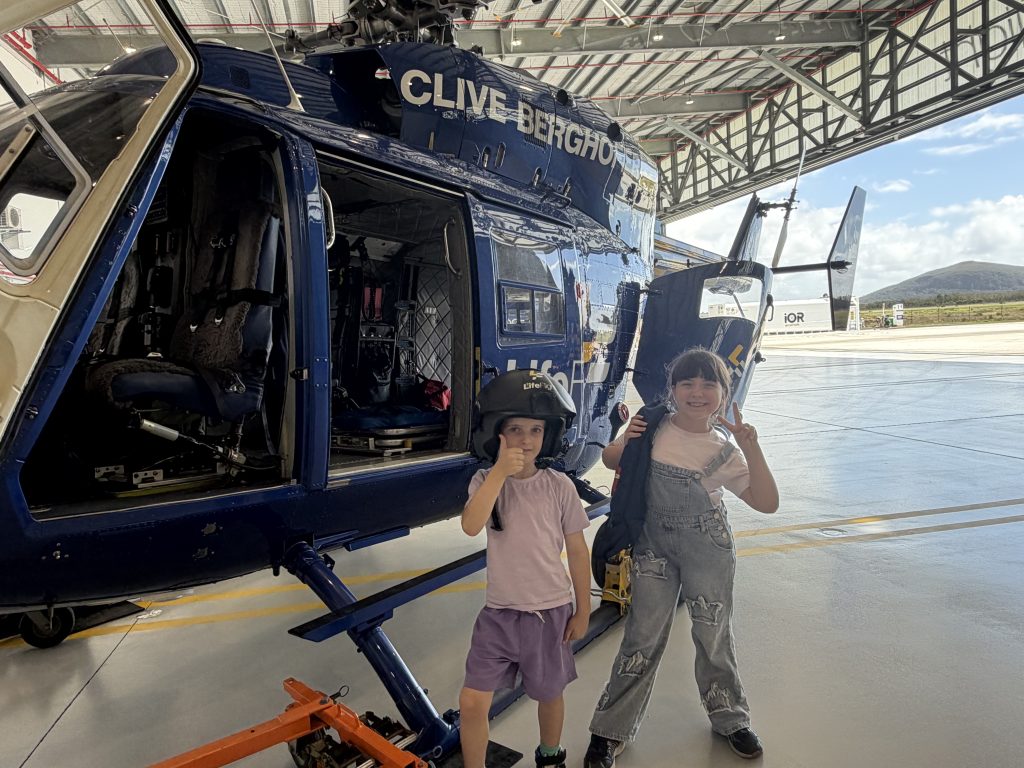
Named in honour of LifeFlight supporter and philanthropist Clive Berghofer AM after a $1 million donation towards the building, it’s set to become a place where people can get a behind-the-scenes look at LifeFlight’s operation in Toowoomba and gain lifesaving skills through the First Minutes Matter workshops.
Toowoomba and Roma crews completed a number of notable missions in 2025.
They included the Roma-based SGAS crew airlifting a man freed from a silo following a five-hour extraction by Queensland Fire Department (QFD) firefighters.
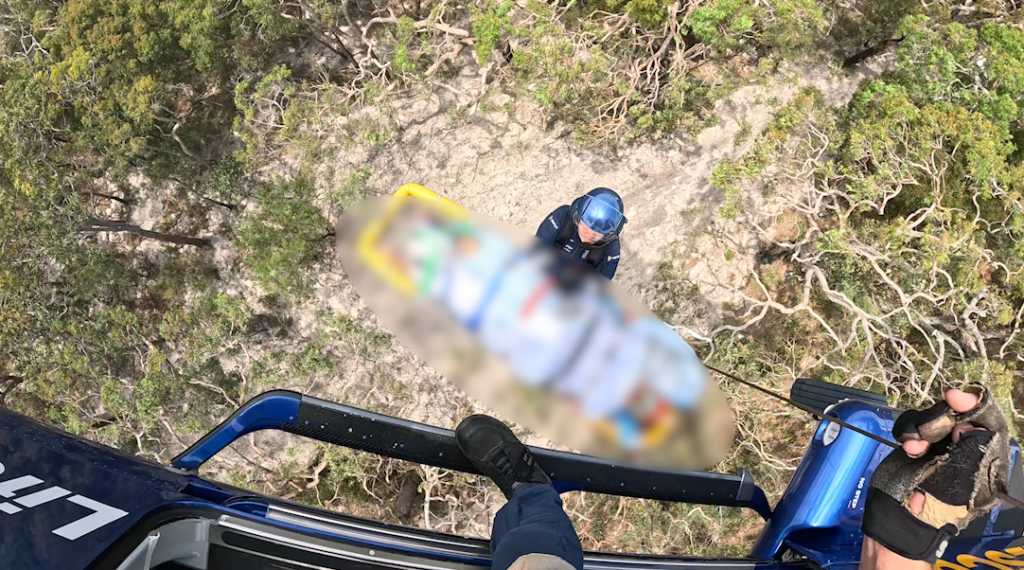
That same month, the Toowoomba crew winched two mountain climbers to safety from Mt Maroon after they became stranded and unable to descend safely.
LifeFlight Acting Chief Operating Officer Pete Elliott, said the Toowoomba and Roma crews continued to demonstrate how vital the aeromedical service is to the regions they serve.
“To help more than 1,000 people in a single year is a big achievement, particularly when you look at the highly diverse nature of their missions,” Mr Elliott said.
“Our agreement with our industry partners in Roma to increase the number of hours dedicated to the community is paying off with SGAS patient numbers surging almost 70 per cent.”
Mr Elliott said the back-to-back record years of 2024 and 2025 showed the organisation’s drive to deliver improved technology and aeromedical capabilities was working.
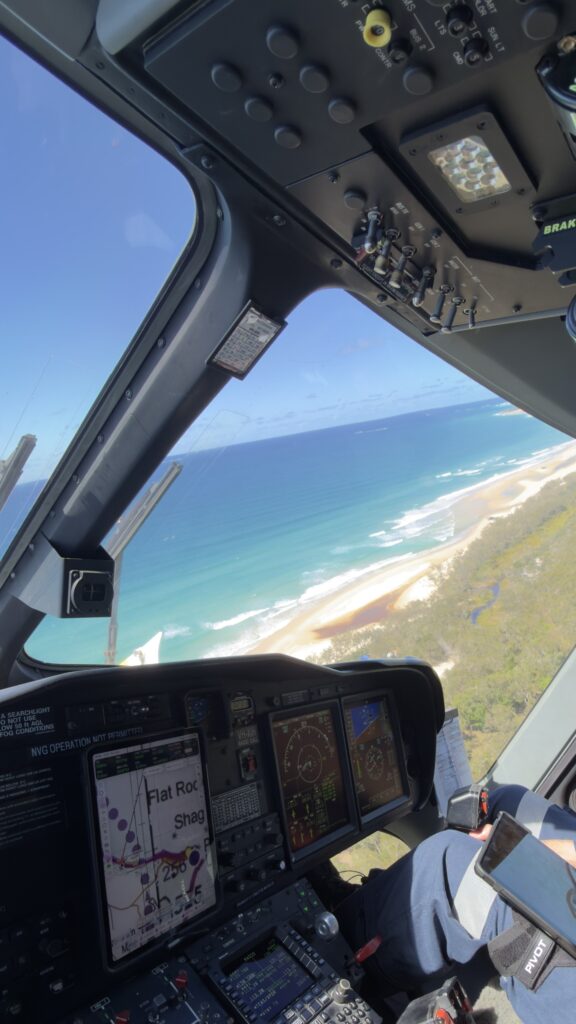
“The new AW139 helicopters, equipment and advanced training programs mean we’re able to help more Queenslanders with world-class aeromedical care,” Mr Elliott said.
“The advanced helicopters are a result of our 10-year service agreement with the Queensland Government, which brings us closer to our goal of bringing equity of healthcare to Queenslanders no matter where they live.”
Mr Elliott said LifeFlight’s operation included highly skilled intensive care medical teams and pilots backed up by LifeFlight’s communication, coordination and control centre known as C3.
He said LifeFlight had cemented new partnerships during the year, such as with AW139 manufacturer Leonardo, to ensure it remained at the forefront of aeromedical training and innovation.
“Preparedness is key for our crews because they do not know what will be thrown at them each day. It can range from winching hikers off a mountain in the southeast through to search and rescue missions for missing people in North Queensland,” he said.
“That’s why our investment in technology and training, alongside our partners, is so important towards delivering life-saving healthcare.”
He said LifeFlight was also ramping up the rollout of its free First Minutes Matter emergency trauma training workshops throughout the state.
Nearly 1200 people participated in First Minutes Matter in 2025 across 150 workshops.
“These are vital for building on community resilience by teaching people practical skills to manage life-threatening events such as car crashes, farming accidents, stroke and snake bites.”
LifeFlight Medical Director Dr Jeff Hooper, said LifeFlight made great strides in 2025 in recruiting new critical care doctors, conducting clinical research, and using real-life rescues to inform community training.
“Because we are a vertically integrated organisation with our own fleet, doctors, nurses and paramedics, we can directly feed their front-line experiences into our research and First Minutes Matter training,” Dr Hooper said.
“We know clinical practice is constantly changing and evolving so we need to make sure we are at the forefront of the latest innovations.”
During the year, LifeFlight’s new medical staff underwent intensive aeromedical training at the LifeFlight Training Academy, including Helicopter Underwater Escape Training (HUET), rescue winching and clinical scenario training.
“Oure crews administer prehospital and retrieval medicine under highly stressful conditions, so they have to be ready for any eventuality, and this is what the training equips them to do,” Dr Hooper said.
“It is why our aircraft are fitted out as mobile intensive care units with advanced medical equipment to care for patients whether we are operating 35,000 feet above the ground in a Challenger jet, or in the back of a helicopter.
“This aeromedical intervention is vitally important as it can be the difference between life and death.”
Crews support search and rescue efforts across 53 million square kilometres of land and sea for the Australian Maritime Safety Authority.
Complementing the helicopter network, four Challenger 604 jets are rotated through the Brisbane, Townsville and Singapore bases.
The jet crews helped 1,014 people in 2025 with Townsville recording a 22 per cent increase in people helped to 598.
LifeFlight’s 24/7 Communications, Coordination, and Control Centre acts as the hub of all operations and is run by a dedicated team of aviation professionals who handle thousands of calls and messages to coordinate complex aeromedical services.
As in previous years, much of LifeFlight’s aeromedical work involved Inter-Facility Transfers (IFT) or moving patients between medical facilities. This ensures all communities have equal access to the best possible healthcare, no matter where they live.
Every 59 minutes, LifeFlight aircraft rescue a seriously ill or injured patient, flying from 10 base locations across the Asia Pacific.
2025 HIGHLIGHTS:
- January – LifeFlight airlifts man after chainsaw incident – The crew airlifted a man who gashed his leg on the blade of a saw while cutting trees.
- April – LifeFlight airlift injured hiker to safety. An injured hiker, who activated a personal distress beacon after he hurt his ankle, was winched off a mountain in the Scenic Rim region.
- May – LifeFlight SGAS airlifts man after sheep incident. The Roma-based LifeFlight Surat Gas Aeromedical Service (SGAS) helicopter crew airlifted a man after he crashed his motorcycle when it collided with a sheep.
- June – LifeFlight airlifts trapped man after five-hour silo ordeal. The Roma-based crew airlifted a man who became stuck while working inside a fertiliser silo.
- June – LifeFlight winches two stranded mountain climbers – The LifeFlight crew winched two mountain climbers to safety from Mt Maroon in the Scenic Rim region.
- November – LifeFlight airlifts patients after vehicle crash and snake bite – The Toowoomba crew airlifted a woman following a three-vehicle crash in Fernvale and later a man bitten by a snake on the side of the Gore Highway.
- November – Woman winch-rescued by LifeFlight after rocky fall – The Toowoomba aeromedical crew winched a woman to safety after she fell while hiking in the McPherson Ranges.
- December – LifeFlight airlifts teenager after vehicle and cattle truck crash – The Toowoomba crew airlifted a teenager to hospital after a cattle truck and utility collided.