



Air Ambulance Stats: 2025
- LifeFlight jet bases in Townsville, Brisbane and Singapore helped 1,014 people
- 432 missions (up 2%)
- 598 people helped from Townsville base (22.8% up on 2024)
- 2,687 flight hours (up 20%)
- 8,838 people helped across the LifeFlight network (up 4.2%)
LifeFlight’s air ambulance fleet airlifted 1,014 patients in 2025, with the Townsville jet flying a record number to hospital amid strong demand for retrievals.
It included international repatriations and transporting patients domestically from regional centres to major hospitals in capital cities.
The Townsville aeromedical crew airlifted 598 patients during the year – 22.8 per cent more than in 2024 – flew 213 missions and clocked up more than 1,100 flight hours.
LifeFlight also expanded its international operations with the Singapore jet doubling its missions to 34.
LifeFlight’s four Challenger 604 air ambulances flew a combined 432 missions, which was 2 per cent higher than the previous year.
Domestic missions carried an average of four patients per multi-stop flight while international missions transported one patient on average and one family member.
Statistics released this week show jet numbers contributed to a new record for LifeFlight, with 8,838 people helped, 4.2 per cent higher than 2024.
The LifeFlight jets completed multiple landmark missions during the 12 months.
In April, LifeFlight was tasked for the first time since 2008 to South America to retrieve a patient in his 70s with cardiac problems experienced during a cruise to Antarctica.
The mission involved navigating multiple time zones, continents and some of the world’s most isolated airfields alongside two full aeromedical crews to ensure the patient’s needs were catered for over the journey.
In August, LifeFlight flew a man in his 40s who suffered a stroke while visiting the remote atoll of Majuro in the Marshall Islands to Fuzhou in China for ongoing care.
LifeFlight General Manager – Air Ambulance Tyson Smith, said enhanced capability coupled with decades of medical expertise was behind the increase in domestic and international missions.
“Our mission to Ushuaia in Argentina is a prime example of this capability. It spanned seven days and 17,040 nautical miles and resulted in the patient being safely handed over to the medical team in Melbourne for further treatment,” he said.
“We’re being tasked more because we’re a reliable and trusted solution for partners and families to get to where they need to go both within Australia and overseas.
“We can do this because we’re one of a few aeromedical providers with integrated bases across two continents, with the capability to manage concurrent high-acuity patient transfers across multiple time zones and regions.”
Mr Smith said LifeFlight’s operation included highly skilled intensive care medical teams and pilots backed up by LifeFlight’s communication, coordination and control centre known as C3.
“We can airlift more than 1,000 patients in a single year because of this vertical integration, which enables us to operate at scale while intricately planning each mission,” he said.
“This year we’ll be further extending our reach through our Singapore base, which saw a significant uptick in missions in 2025.
“This base enables us to halve the time it takes to reach multiple destinations by providing a springboard into the northern hemisphere.
“We’ve also placed an increasing emphasis on hiring doctors and nurses in Singapore trained to Australian standards and able to collaborate with their colleagues here.
“Turning to home, our strong foundation in Queensland, underpinned by our service agreement with the Queensland Government, means we’re also well placed to expand our patient numbers in Australia, particularly from the Townsville base.”
LifeFlight Medical Director Dr Jeff Hooper, said the doctors and nurses working onboard the air ambulance fleet were adept at providing the best possible healthcare for patients while working 35,000 feet above ground in a Challenger jet.
“No mission is without complications particularly with high-acuity patients, and that’s why we recruit highly-qualified doctors and nurses who can meet these challenges,” Dr Hooper said.
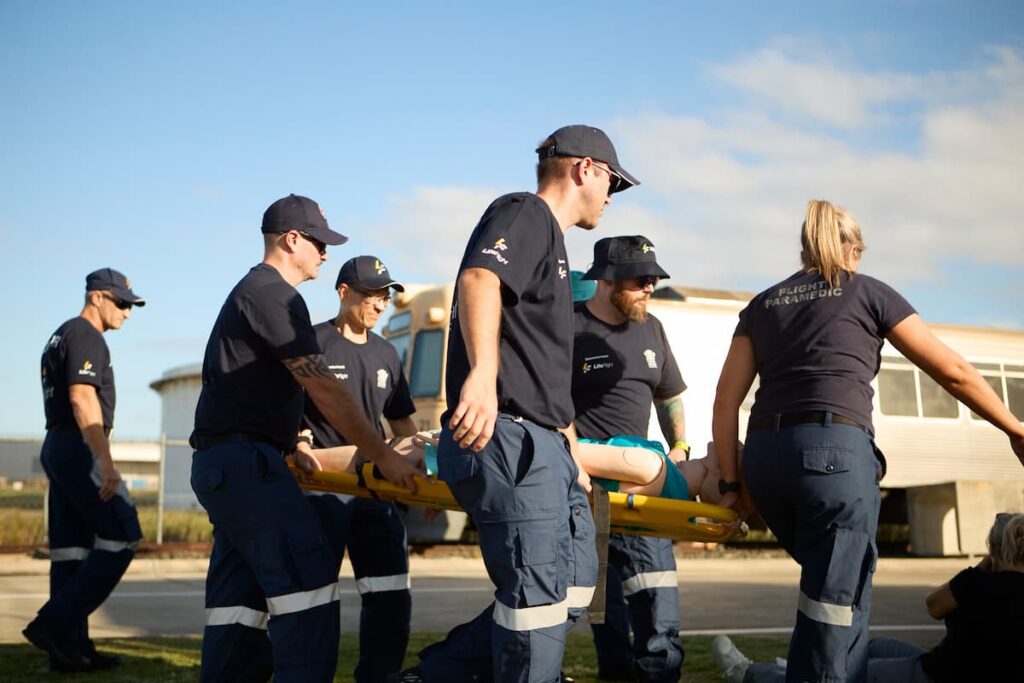
“It’s also why we put such an emphasis on intensive aeromedical training at the LifeFlight training academy.
“Our crews administer prehospital and retrieval medicine under highly stressful conditions, so they have to be ready for any eventuality, and this is what the training equips them to do.
“This aeromedical intervention is vitally important as it can be the difference between life and death.”
Every 59 minutes, LifeFlight aircraft rescue a seriously ill or injured patient, flying from 10 base locations across the Asia Pacific.