



When emerging contemporary Indigenous artist and Gomeroi woman Melinda Luscombe painted her latest vibrant creation she meditated on the fragility of life.
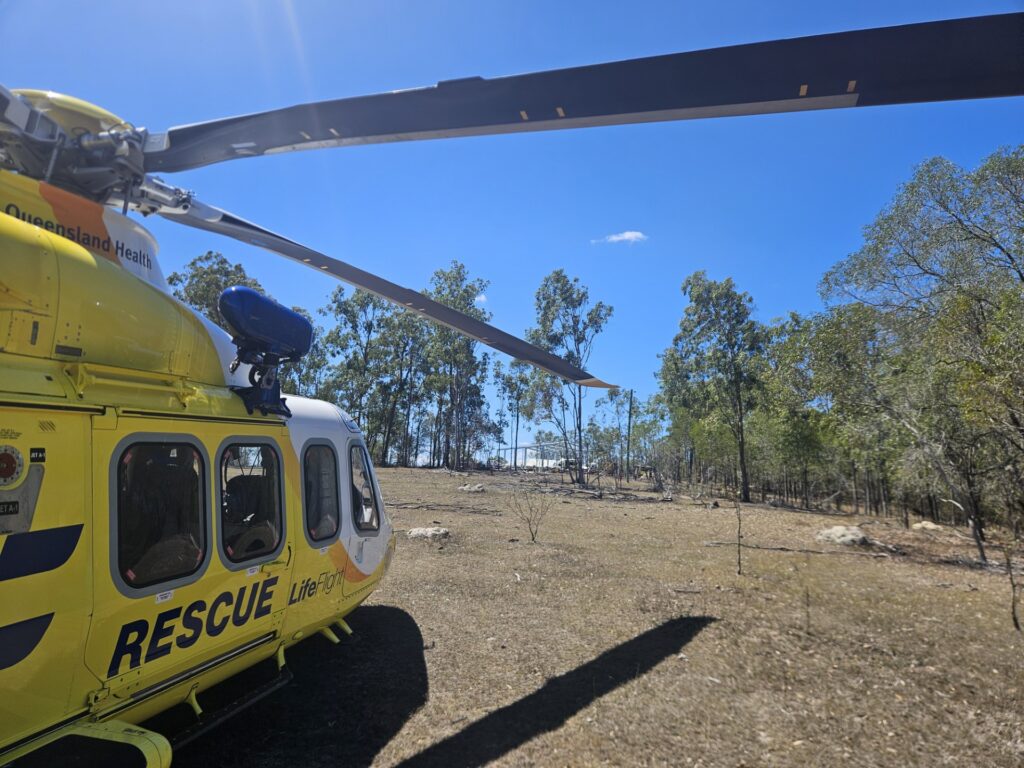
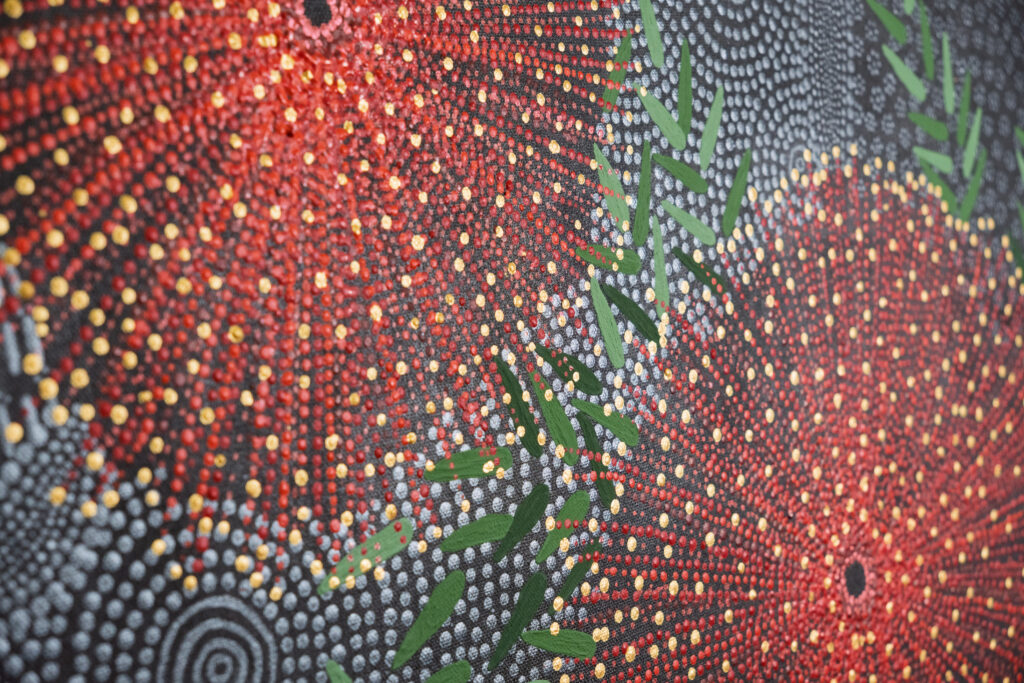
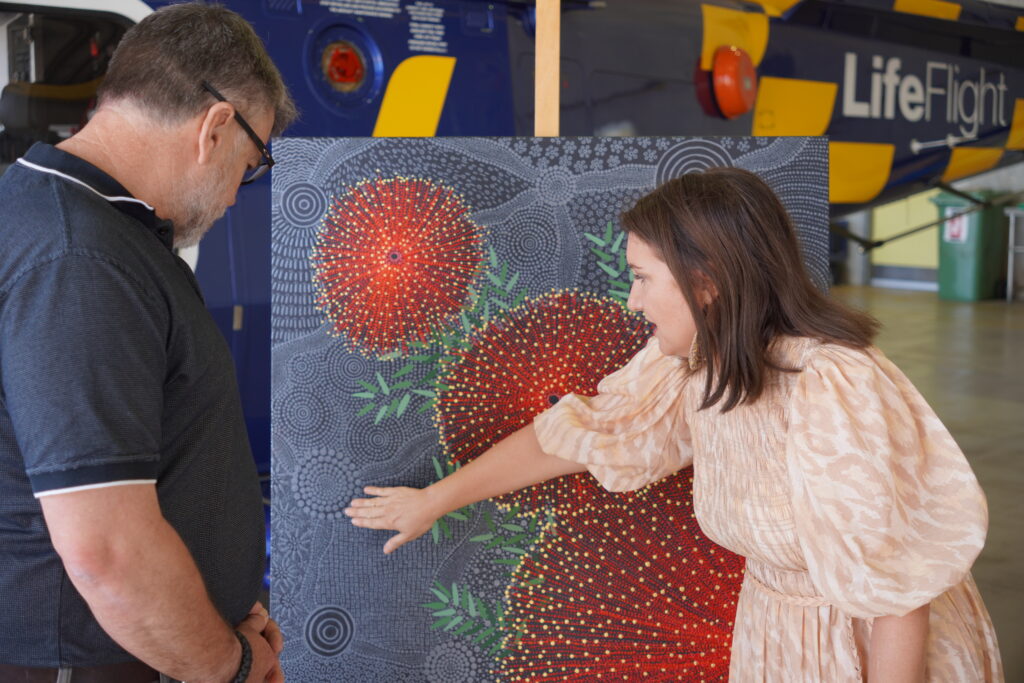
The traditional painting, an Acknowledgment of Country made up of thousands of dots and dashes, tells the story of LifeFlight in the southwest and is now hanging in the charity’s Toowoomba base.
“I spent a lot of time thinking about my ancestry and the history of my family,” Melinda said. “And I was compelled to think about my father and family and health in general when I was creating this painting.”
The Toowoomba-based, award-winning artist knows firsthand how crucial LifeFlight is to regional Queenslanders.
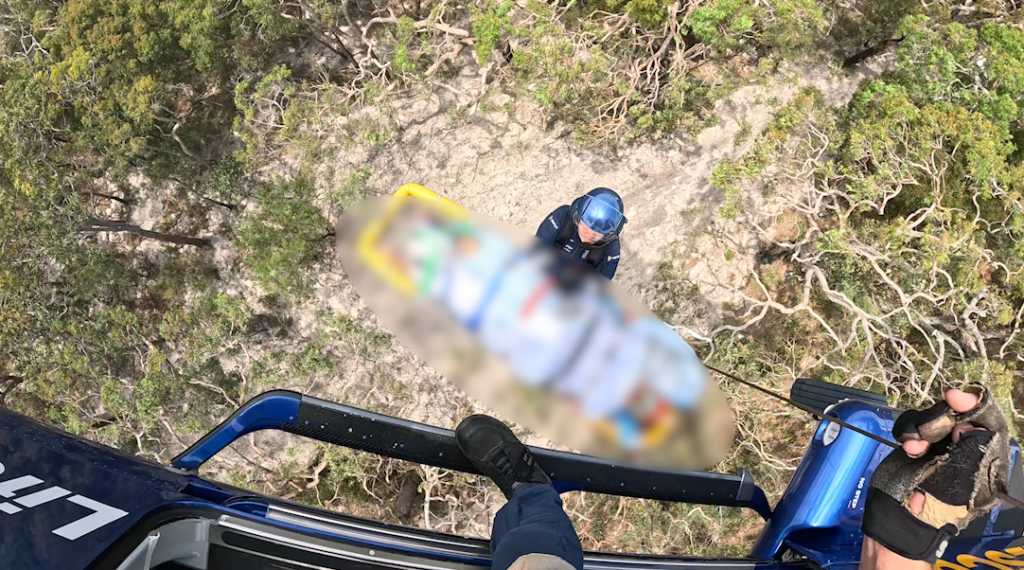
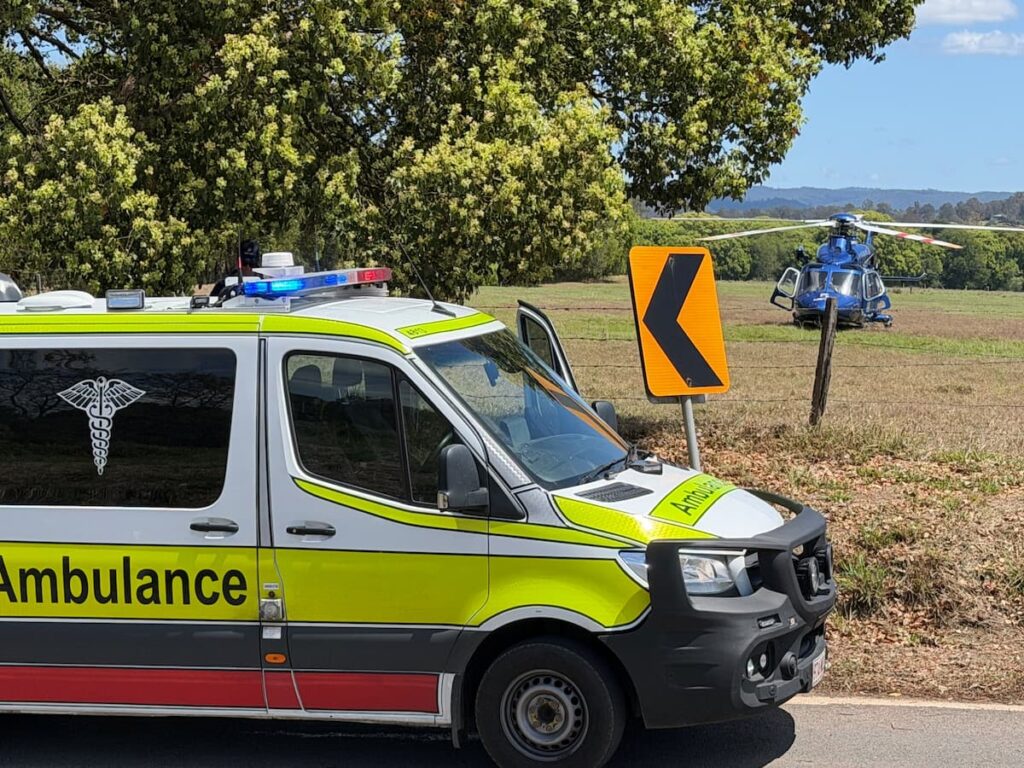
A LifeFlight aeromedical team flew her father, Robert Fitzsimmons, from Dalby Hospital to Princess Alexandra Hospital in Brisbane 12 years ago when he was in a critical condition with a complex medical emergency.
“My connection to LifeFlight is a fairly personal one,” she said. “It makes me a little bit emotional to think about LifeFlight and what they did for my dad.
“Without LifeFlight transporting him to Brisbane, I’m not sure what would have happened. I’m extremely grateful for the services that LifeFlight provided for him to be able to make it.”
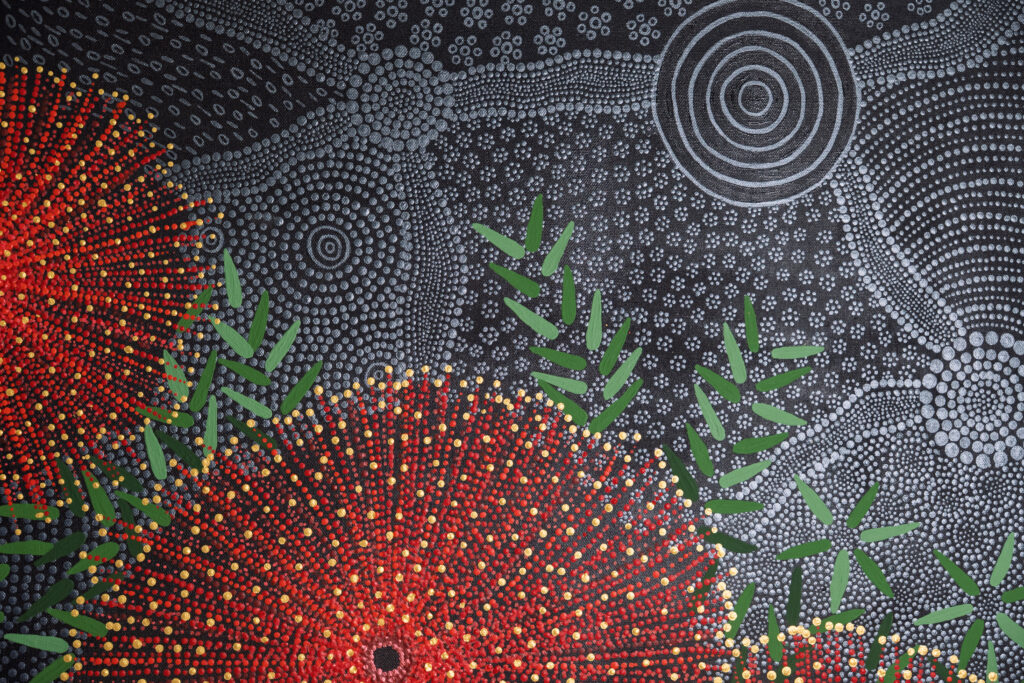
Her native botanical painting of vibrant red tick bush reflects her deep appreciation for Australia’s native flora and breaks away from her normal black and white only paintings.
She used traditional First Nations dot painting techniques to create the stunning flowers and said the painting is a celebration of traditional bush medicine and her LifeFlight connection story that highlights flight paths, Western Downs meeting places, rain, stars, rainbows, and watering holes.
“With most of my paintings, it’s a reflection of connecting with the environment,” she said.
“I love that connection with plants because it’s a tradition that my grandmother and my great grandmother would have practiced. It brings me happiness to relive what they would have practiced a long time ago.
“This painting is a celebration of traditional bush medicine incorporated with a modern service that looks after protecting and taking care of people.
“I used the red to highlight the importance of LifeFlight’s services, and I think red ties in well with emergencies and the urgency of LifeFlight missions.”
Instead of traditional First Nations walking tracks, she’s used curved lines to show flight routes to important Western Downs meeting places LifeFlight crews fly out to, that she has a personal connection with including Toowoomba, Dalby, Chinchilla and Tara.
“It was really exciting to present the painting to Scott, the base lead in Toowoomba,” Melinda said.
“It was really enjoyable to see how much he appreciated the painting and understood what the meaning behind the painting was for the community.
“Native botanicals hold great importance in Indigenous communities and are the foundation of our cultural survival, connection to country and have been used in traditional ceremonies for thousands of years.
“It makes me feel excited to be an artist who has worked alongside LifeFlight for this project.”
Kunzea grows locally in the Western Downs and is a medicinal plant used by Indigenous Australians for thousands of years.
It is also used in modern products to relieve insect bites, muscular aches, arthritis, skin irritations and cold and flu symptoms.
Melinda has been living on Giabal and Jarowair land for over two decades.
Melinda Luscombe will hold her first solo exhibition showcasing her black and white paintings that celebrate native flora and explore the enduring connection between Country, culture and community in an exhibit called Light and Shade at the University of Southern Queensland Art Gallery between July 28 and August 23.