



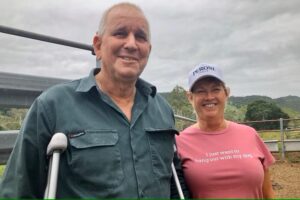
 Patient: Stuart Vollmerhausen (Gympie region cattle breeder)
Incident: Trampled by cattle while drafting bulls on his rural property
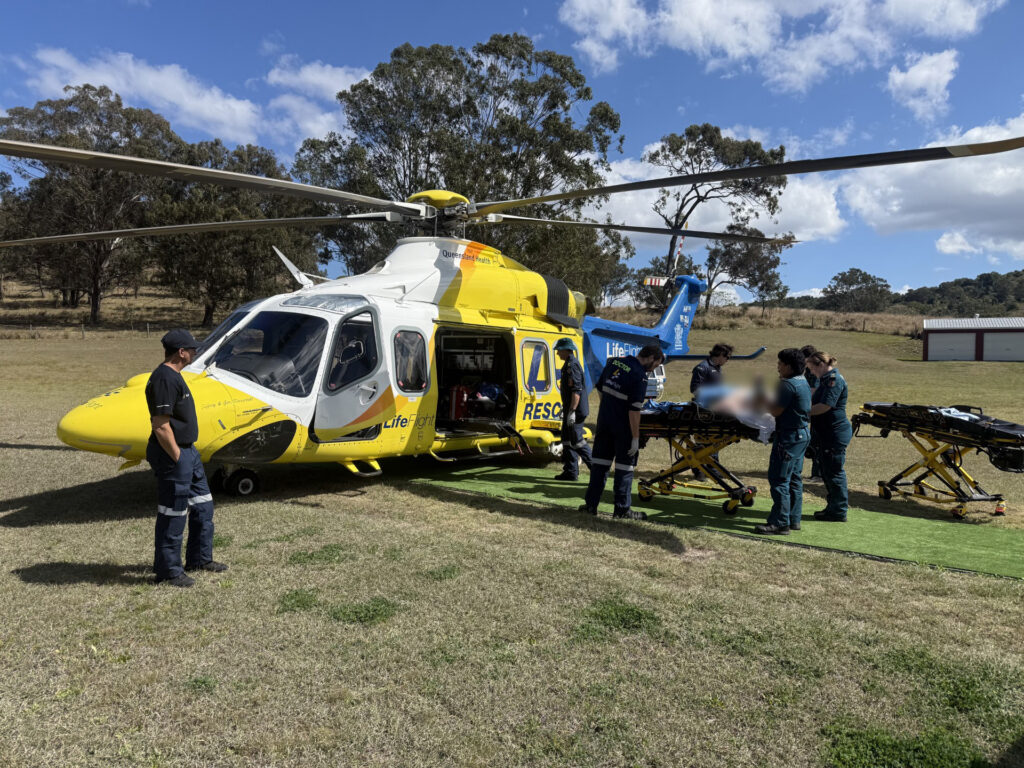
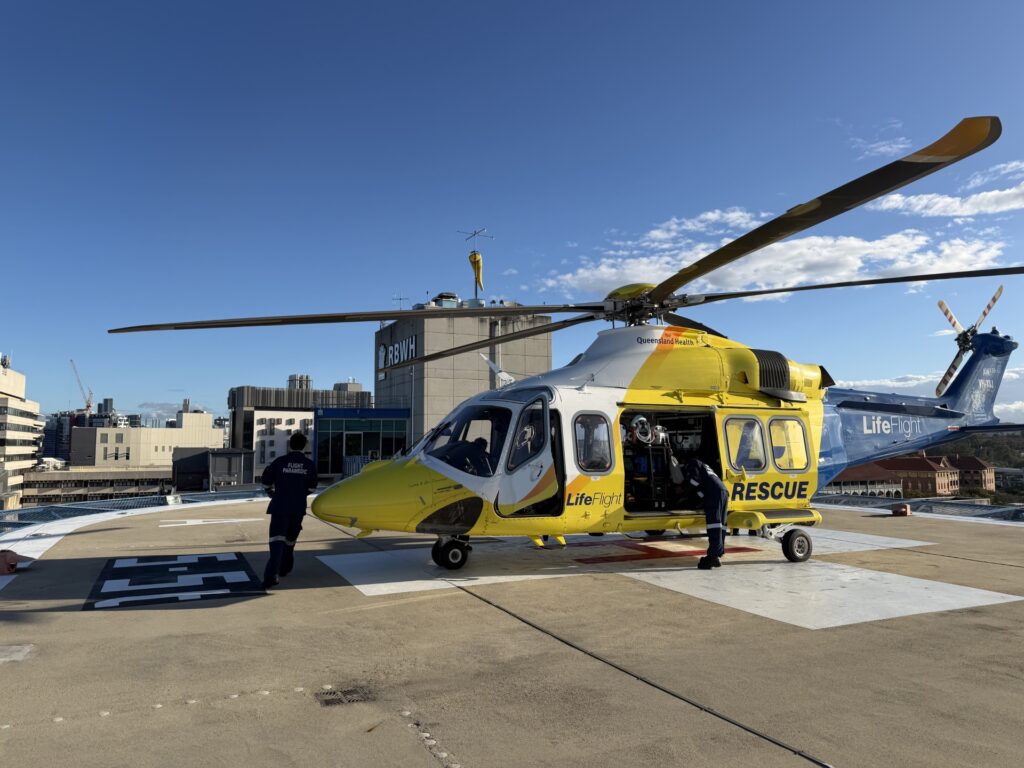
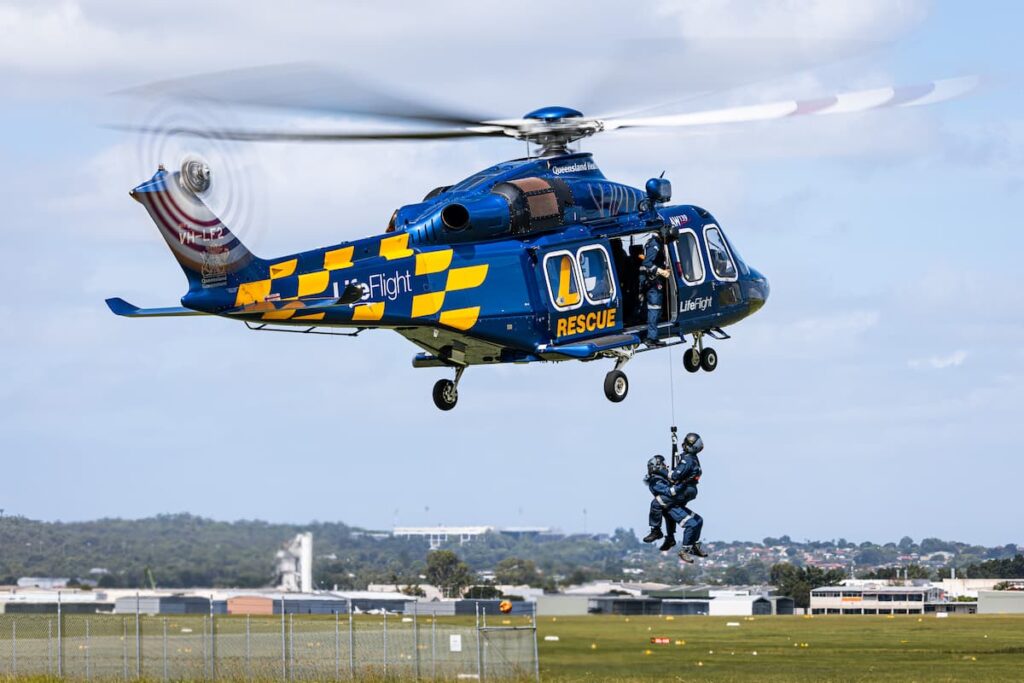
LifeFlight Rescue: Aeromedical retrieval to hospital following serious injuries
Key Capabilities: Rural emergency response, aeromedical retrieval and community trauma training
The Cattle Accident
Stuart Vollmerhausen knows how quickly a normal day on the farm can turn into a medical emergency.
The Gympie region cattle breeder was drafting seven young bulls in January 2023 when a 350-kilogram weaner charged from behind, knocking him to the ground as the other animals panicked.
“They got spooked. I was laying on the ground, and blood was coming out of my head,” Stuart said.
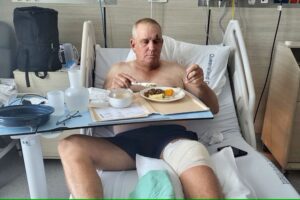
“I ended up with a broken rib, a nasty hoof cut to the head and a badly bruised knee.”
Within an hour of starting work that morning, Stuart was being airlifted to hospital.
Trauma Training for Rural Communities
After experiencing firsthand how quickly accidents can happen on the farm, Stuart encouraged his local community to refresh their emergency skills through LifeFlight’s First Minutes Matter trauma training workshops.
Stuart attended a workshop at the Theebine Hotel, sharing his experience and encouraging others to prepare for the unexpected.
“You never know when you will need to use those skills,” Stuart said.
“First Minutes Matter is such an excellent program.”
Preparing Before Help Arrives
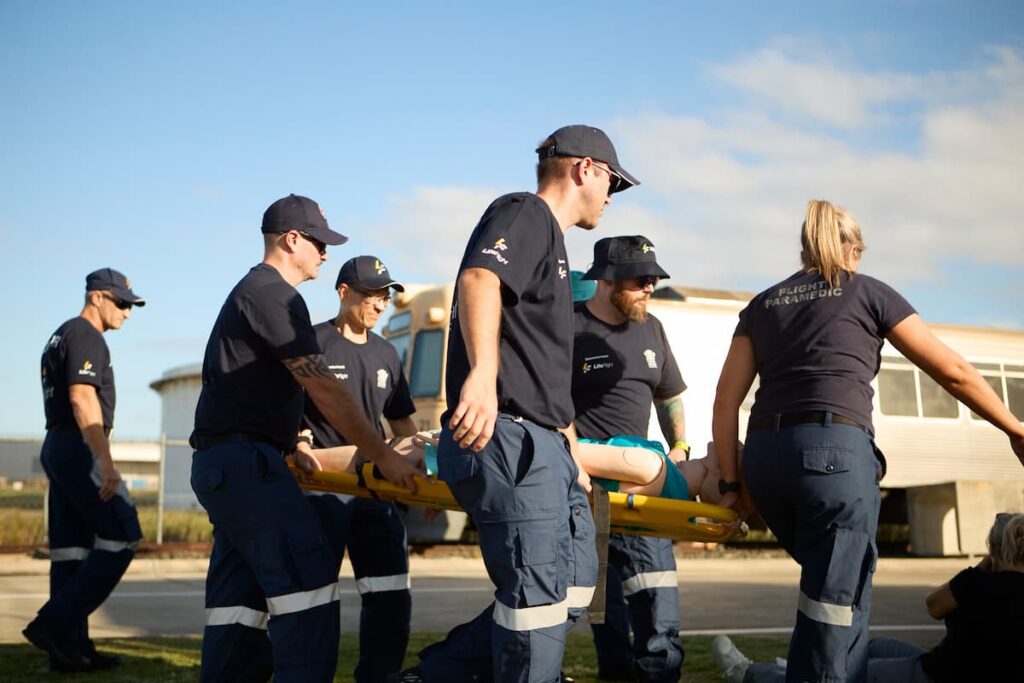
LifeFlight’s First Minutes Matter workshops teach participants practical skills to respond during life-threatening emergencies, including burns, severe bleeding, snake bites, choking and CPR.
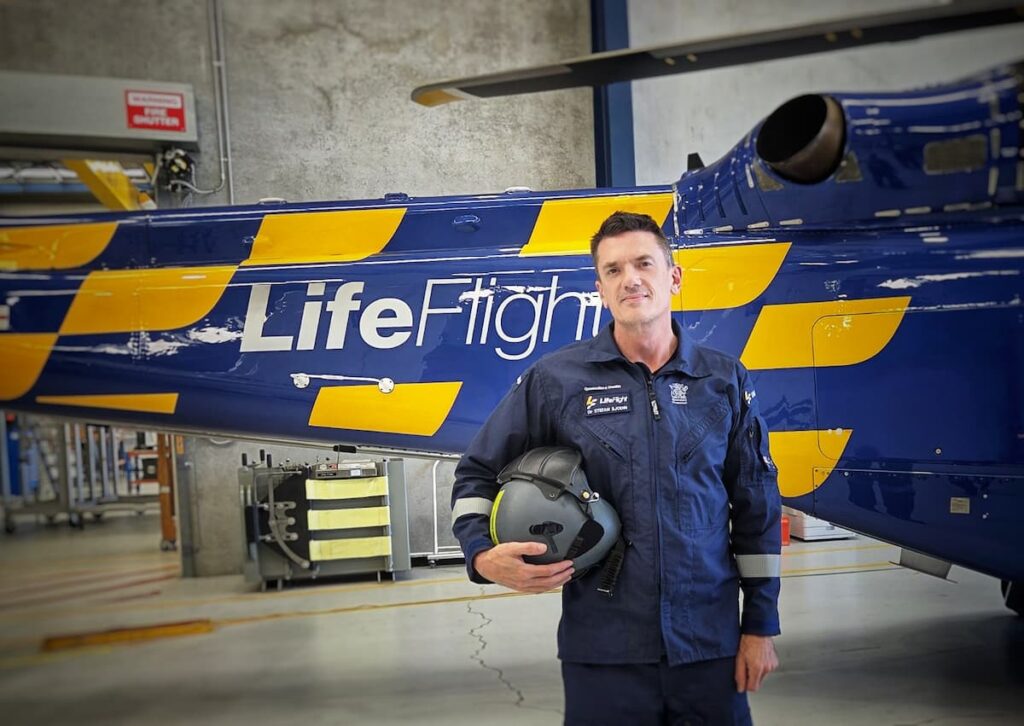
LifeFlight regional medical educator Leah Harrison said early action can make a critical difference while waiting for professional help.
“The most important benefit of this program is being able to help people in the first stages of their accident or medical emergency,” Ms Harrison said.
“These skills are especially vital in the rural community where road and farming accidents are more common.”
Closing the Distance in Regional Queensland
For people living in regional communities, emergency services may be further away, making immediate action from bystanders even more important.
Stuart’s experience is a reminder that accidents can happen without warning — and knowing what to do in those first moments can help support better outcomes.