



Trust, Teamwork and Training: How a complex Carnarvon Gorge rescue brought a stranded hiker home
ROMA, QUEENSLAND
The challenging rescue of Rockhampton mother-of-two Donna Neil was already underway long before a LifeFlight helicopter appeared over the Carnarvon Gorge ridgeline at sunrise in April this year.
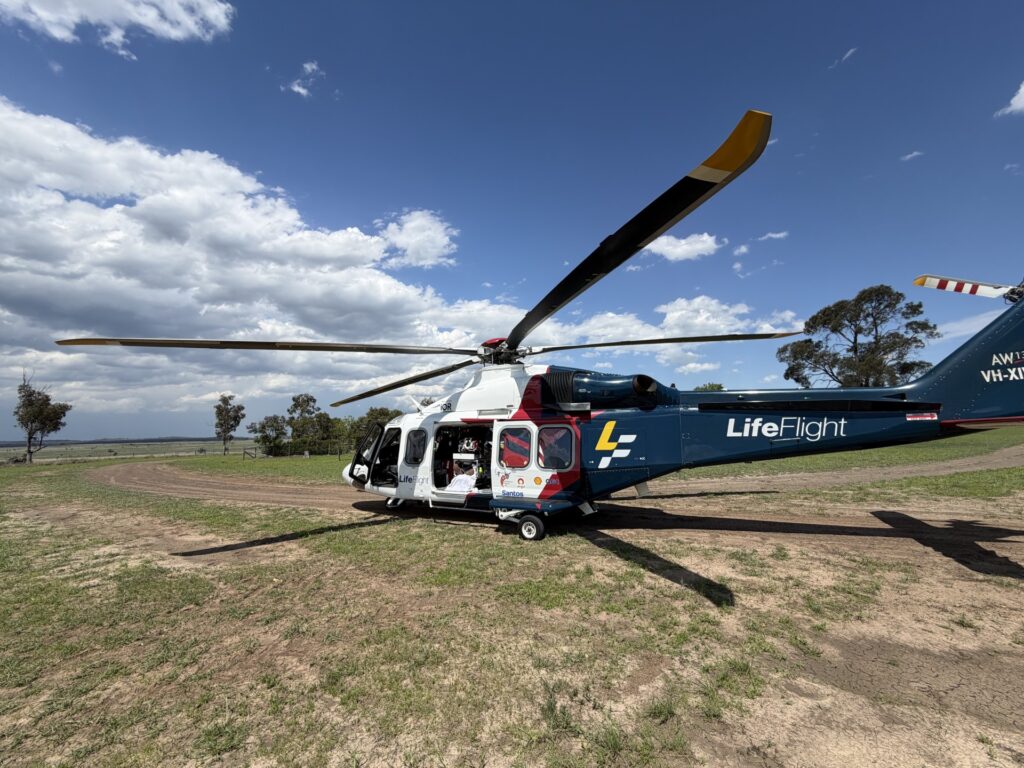
The successful mission was a culmination of years of training for the Roma-based crew including hundreds of hours practising complex rescue techniques. The aeromedical team included a pilot, aircrew officer, rescue crew officer, critical care doctor and paramedic and a state-of-the art AW139 helicopter.
A training hike takes a dramatic turn
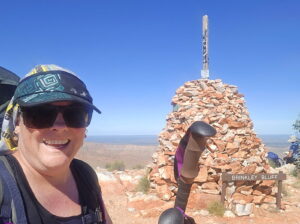
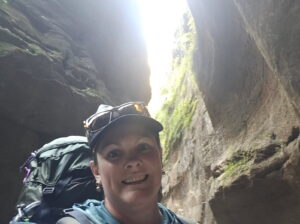
Donna fell approximately 15 metres down a steep mountainside while hiking alone on Queensland’s challenging Great Walk in Carnarvon National Park. She was training for one of Australia’s most iconic long-distance walks, the Northern Territory 230-kilometre Larapinta Trail. Donna had hoped the 87-kilometre Great Walk would give her experience carrying an 18-kilogram backpack so she could test her equipment, food and water rations. The last thing she expected was an emergency helicopter rescue.
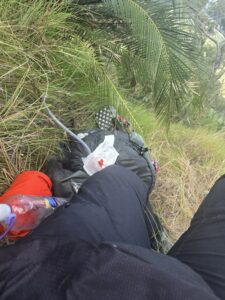
Donna fell around 11am on the second day of her five-day hike. She’d left the Big Bend campsite at first light on April 10 and made her way through one of the most spectacular sections of the Carnarvon Gorge. She’d walked through Boowinda Gorge and was surrounded by towering sandstone cliffs that narrowed around her. It was so narrow in some parts she could open her arms and touch both sides. “It was the most amazing thing I’ve ever seen,” she said. “I could see where centuries of water had smoothed the rock. It was incredibly beautiful.”
That beauty soon gave way to rugged terrain, loose leaf covered rocks, steep climbs and long grass that hid the trail and forced her to frequently zap her phone battery to check her digital maps. She was walking through Battleship Ridge up rough, shaly rock steps near a steep section of track carved into the mountainside when one of her hiking poles lodged between rocks at the base of a tree. When she pulled it free, the weight of her pack tipped her balance and flung her sideways.
“I lost my balance when I yanked my walking stick out of the rocks,” Donna said. “It was a sheer edge. I did a sort of backwards cartwheel fall and thankfully when I landed the backpack broke my fall.”
Donna landed at the base of the rocky steps she had just climbed up. It was an awkward 50-degree slope which made it difficult not to fall further down the mountain. She had sharp, stabbing back pain and it got worse when she tried to move. It was hot and she had no cover from the sun, so her priority was conserving the small amount of water she had left. The drink bottle in the side of her backpack smashed when she fell. She had no idea when help would arrive.
A well-packed backpack and an off-duty hero
Donna was well prepared for her hike and had packed a ZOLEO satellite communicator and solar charging mat at the top of her backpack. Despite a flat phone battery, she was able to recharge her phone. Even without phone reception, she could exchange satellite messages with emergency services and her husband, Jeff who did his best to keep her spirits high. The messages arrived intermittently, sometimes taking up to half an hour to come through, but they helped her feel less alone. Knowing help was coming eased her anxiety.
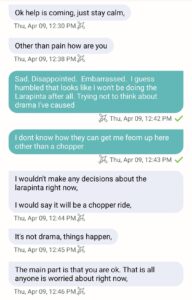
The LifeFlight Roma-based aeromedical team was flying towards Donna getting ready to lower the winch cable when the chopper phone rang and the team were rediverted to a more seriously injured patient. She was told the chopper had been retasked and prepared herself for a long, uncomfortable night alone. But another adventurer, one of the men who had originally surveyed The Great Walk came to her rescue. Off-duty LifeFlight aircrew officer and base lead Bryce Duke, an SES volunteer, hiked 15 kilometres with a fully loaded pack, in the dark to reach her. It only took him six hours because he had walked it eight times before and knew it so well. He arrived at 2am and was able to give Donna water, over-the-counter pain relief, a hydrolyte drink prescribed by the LifeFlight doctor and warm blankets. Yet the greatest comfort Bryce brought Donna was the relief in knowing she was no longer alone.
“She was very grateful when she saw me coming up through the trees,” Bryce said. “There was a lot of relief on her face. I just introduced myself and said I’m here to help and I’m staying with you until the LifeFlight helicopter arrives.“
Bryce monitored Donna’s condition for the next five hours.
“The sun went down around 6pm and the moon didn’t come up to around 10pm,” Donna said. “Those four hours were really, really dark. I was worried about snakes. When the bird song settled, I could hear animal noises in the long grass on either side of where I was. When I saw Bryce’s torch light I burst into tears. I immediately had so much trust for the person in front of me. He really reassured me that I was going to be okay.”
Having a highly experienced LifeFlight aircrew officer beside Donna overnight proved invaluable. Bryce was able to provide precise, vital updates from the ground and relay critical information to the rescue crew so they could reconfigure the chopper before taking off. Donna’s pain worsened during the night. The information he gathered helped his LifeFlight colleagues plan the safest possible extraction. The Roma team flew out the next morning at first light to winch Donna into the helicopter and fly her to Roma Hospital for assessment. The crew found their patient easily because Bryce signaled using his LED torch.
A complex winch rescue
For experienced LifeFlight pilot Pete Marris, Donna’s mission highlighted why LifeFlight crews prioritise training. “We train for this sort of operation regularly, and I think the big thing is that you’re not just training individual skills, you’re training to operate as a crew, each doing their own job and trusting others to do theirs, working together to get somebody safely out of a very difficult situation,” Pete said. “By the time you arrive at a job like Carnarvon Gorge, everybody knows their role.”
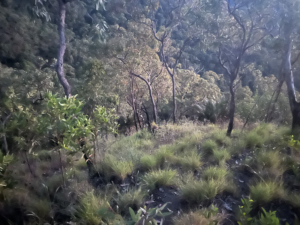
The aeromedical team’s preparation was tested in one of Queensland’s most spectacular and challenging rescue environments. Carnarvon Gorge is breathtaking country but presents significant challenges for rescue crews. The steep terrain, dense timber, narrow ridgelines and confined flying environment meant there was little room for error. “We were taking a fairly large helicopter, an AW139, down into a confined gorge with significant terrain around us,” Pete said. “It’s not just a matter of finding the patient and hovering over them.”
From the cockpit, pilots cannot always see directly beneath the aircraft during a winch operation. Instead, they rely on precise instructions from the aircrew officer managing the winch cable and rescue from the doorway. “They’re effectively your eyes underneath the aircraft,” Pete said. “They’ll be telling you, forward two, right one, hold. And you are flying the helicopter in response to those directions while also maintaining awareness of the terrain around you. That takes a lot of trust. But it’s not blind trust – it’s trust that’s developed through training and doing these operations together. Everybody is doing something different. The pilot is managing the aircraft and the terrain, the aircrew officer is managing the winch and directing the helicopter, and the rescue crew officer is down on the ground working with the medical team to look after and prepare the patient for a winch rescue. Nobody is working independently. Everything one person does affects somebody else.”
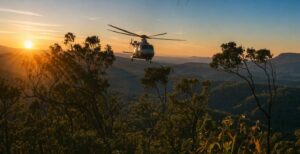
LifeFlight aircrew officer Nick McKee was Pete’s eyes for Donna’s winch rescue and said where she’d fallen added to the complexity of her rescue. The steep mountainside, surrounding timber and narrow track meant there was only a small area suitable for the winch extraction. “All winches have an inherent level of complexity and they vary every time,” Nick said. “The complexity on this one was the terrain. There were very limited areas we could safely winch from.”
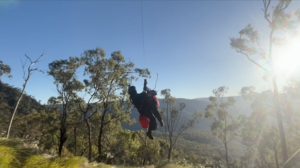
As sunrise lit up the gorge, Donna heard the distinctive sound of the rotor blades, then she saw the helicopter coming over the hills towards her. “It was an overwhelming feeling of absolute relief,” she said. “When I first saw the LifeFlight helicopter, I thought: ‘they are here to get me’.”
Bringing Donna home
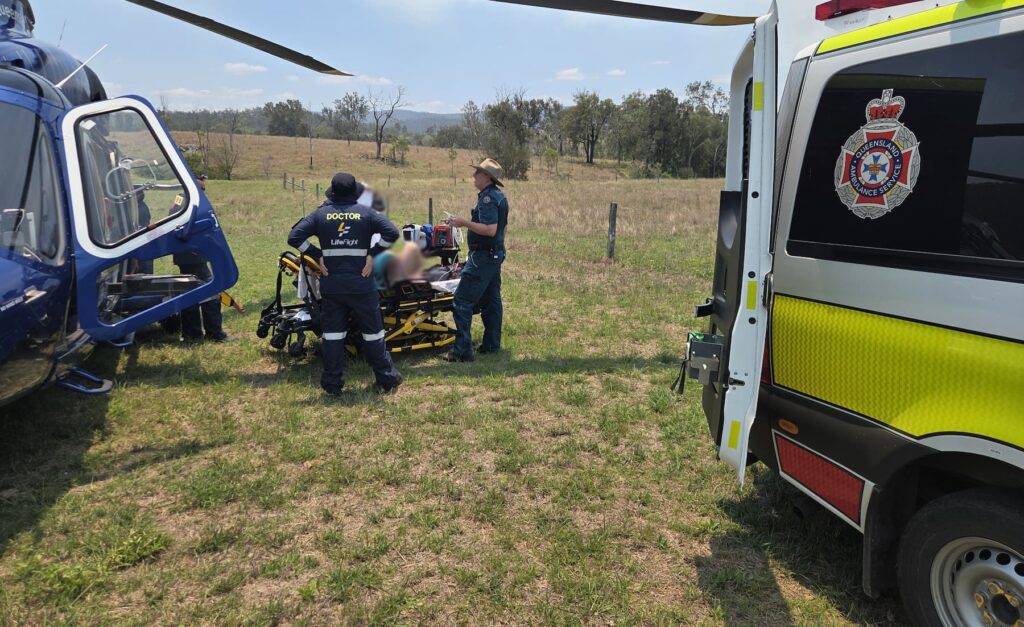
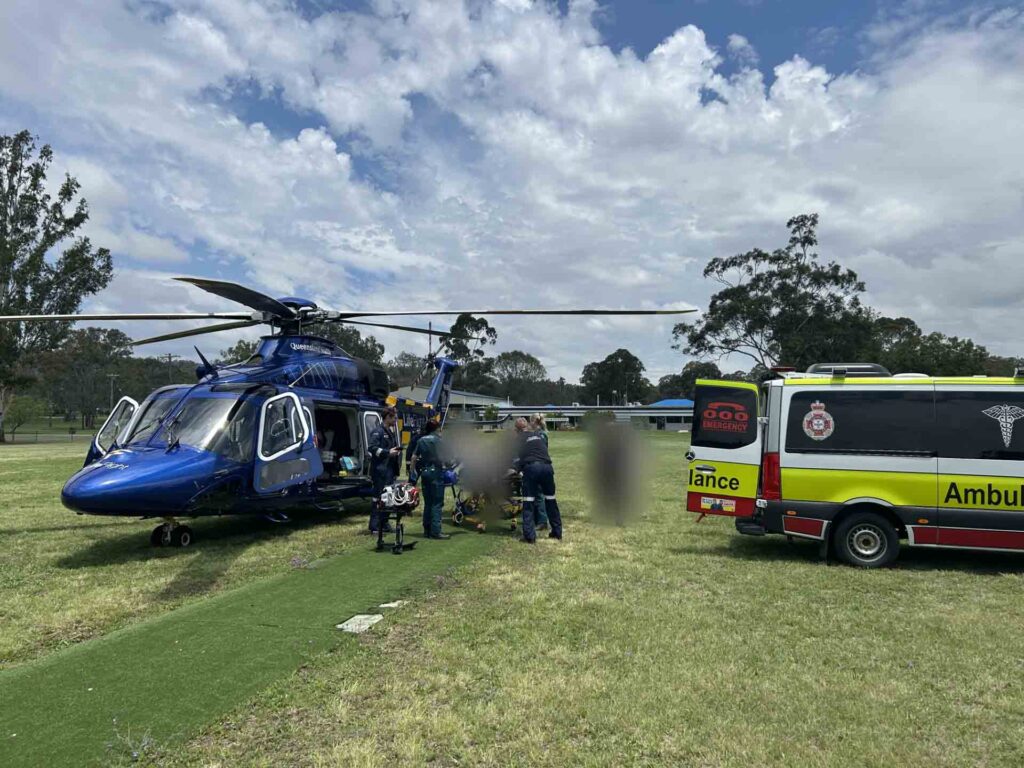
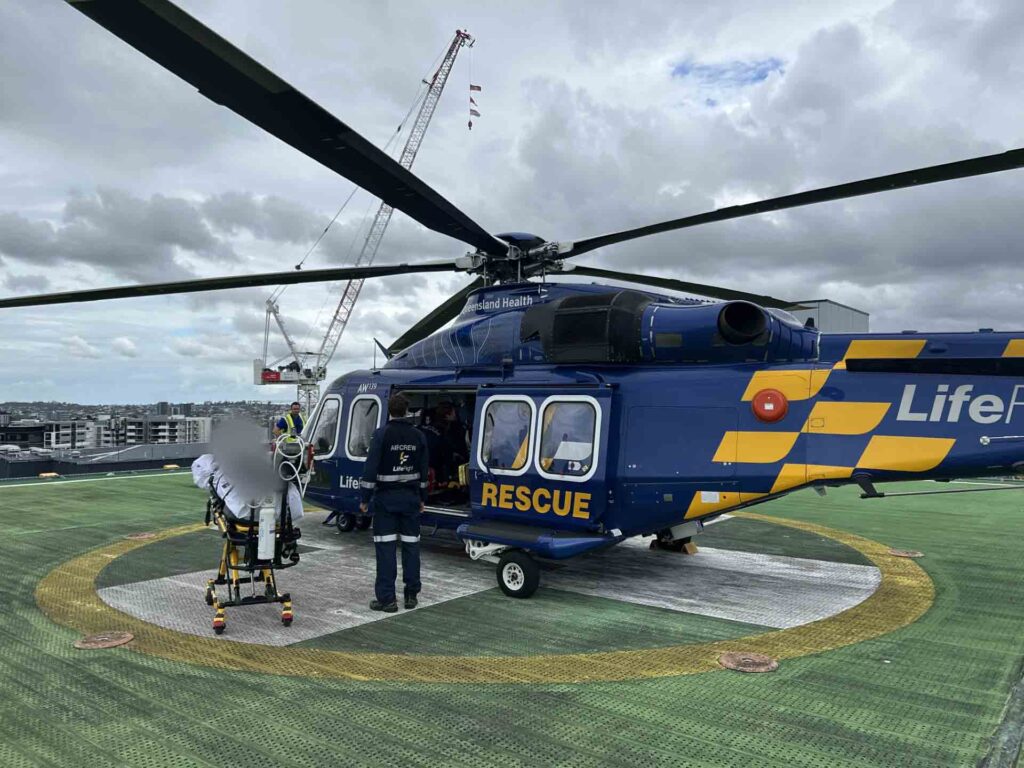
The LifeFlight critical care doctor and critical care paramedic did a top-to-toe assessment before helping Donna move to a nearby winch site. She was eased into a rescue chair harness and winched into the helicopter. The doctor put in the intravenous line and administered pain relief on the way to Roma Hospital. Despite the significant fall, her rescue crew were happy to hear that her backpack absorbed much of the impact which meant Donna only ended up with soft tissue injury.
“It’s always a good thing to go and help people,” Bryce said. “That’s what we sign up for. If someone’s in need, we drop what we’re doing and we go and help. Donna would have been in a world of trouble if a helicopter had not been available.”
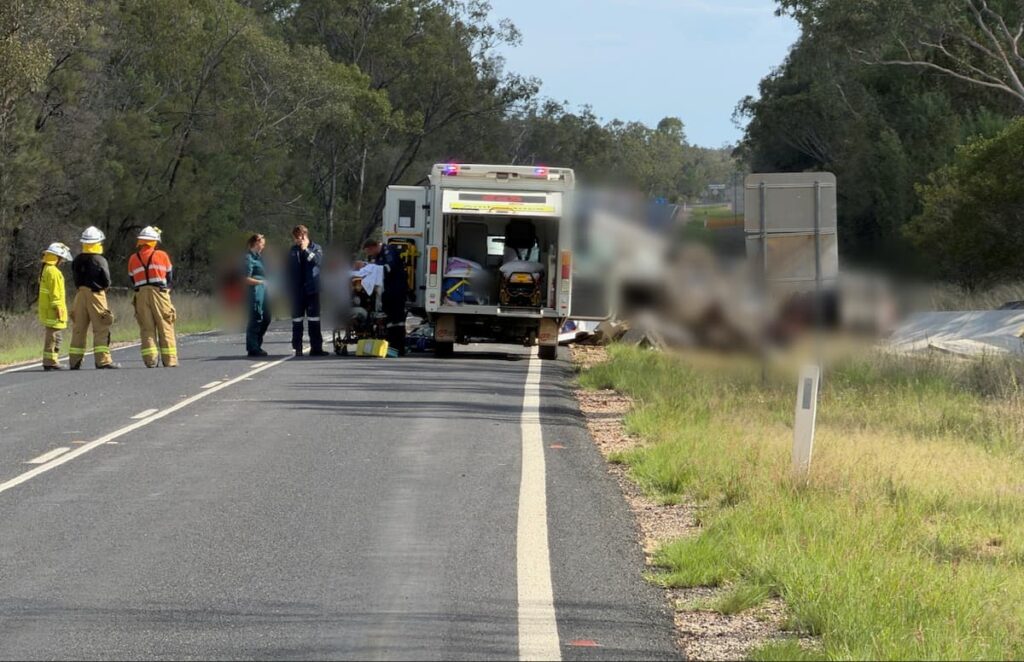
Later that same day, the same Roma aeromedical team flew back to Carnarvon Gorge to find two other bushwalkers who had got themselves into trouble and needed rescuing.
Despite the ordeal, Donna refused to let the accident derail her goals. In June, she completed the 230-kilometre Larapinta Trail she had been training for when she fell. Looking back, she remains grateful for the LifeFlight crew who rescued her. “I felt completely looked after and safe,” she said.
Her husband, Jeff, said he’ll never forget LifeFlight’s efforts to save his wife. “There’s no way we could have got Donna out on foot,” he said. “LifeFlight got my wife home again.”