LifeFlight experienced another record year of saving lives and supporting communities. Demand was driven by Queensland’s growing regional population and LifeFlight’s enhanced capability through significant investments in new helicopters, base builds and training.
LifeFlight’s growth was possible due to the support from the community, donors and philanthropy, government, and new commercial partnerships.
Financial Year 24-25 at a glance
0
missions completed by LifeFlight’s rescue helicopters
0
people helped by LifeFlight’s air ambulance jets
0
helicopter mission flying hours
0
people helped each week – or a person helped every 62 minutes
0+
Total people helped since LifeFlight’s inception 46 years ago
Regional Highlights
North West
LifeFlight marked a record year in the North West, responding to a wide range of emergencies across vast, remote terrain. Major missions included long-distance rescues of stranded travellers, and the region will soon be supported by a new AW139 helicopter to further boost capability.
0
People helped
0
Hours flown
South West
LifeFlight’s Roma-based SGAS crew had a busy year, with inter-facility transfers more than doubling. The team responded to a wide range of emergencies — from cardiac and animal-related incidents to vehicle crashes — including notable rescues like a man trapped in a fertiliser silo and a motorcyclist who collided with a sheep.
0
People helped
0
Hours flown
Darling Downs
The Toowoomba-based crew had LifeFlight’s busiest year, responding to a wide range of emergencies. Missions often involved injured motorists, hikers, and people hurt in remote or rugged terrain, including animal-related incidents.
0
People helped
0
Hours flown
Sunshine Coast
The Sunshine Coast crew completed hundreds of missions, including complex remote rescues in challenging environments. Notable responses included two difficult paragliding emergencies, where patients were winched to safety from cliffs after severe falls and a mid-air collision.
0
People helped
0
Hours flown
Wide Bay-Burnett
The Bundaberg crew led the state in search and rescue missions, with many focused on missing boaties and a sharp rise in motor vehicle accident responses. They also handled snakebite emergencies and secured 24/7 doctor coverage to strengthen aeromedical support in the region.
0
People helped
0
Hours flown
South East
Marking 10 years at Brisbane Airport, the crew continued delivering critical care across urban, coastal, and remote areas. Notable missions included rescuing a teenager with a severe leg injury in Moreton Bay and a boy hurt in a toboggan incident on Moreton Island.
0
People helped
0
Hours flown
Sunshine Coast
The crew also winched a man to safety
after he fell 20 metres off a cliff at Noosa
and airlifted a man from K’gari, after the
gyrocopter he was flying crashed.
Wide Bay-Burnett
The crew conducted numerous water and
medical rescues, including winching four
men from a swamped boat near K’gari and
airlifting a man from a car carrier vessel off
the Sunshine Coast.
South East
Notable missions by the crew included
airlifting a teenager who suffered a leg
laceration after jumping from a pier in the
Moreton Bay region, and a boy injured in a
toboggan incident on Moreton Island.
North West
Late 2024 saw the crew fly more than 555
kilometres over the Australian desert to
rescue two people stranded after floodwaters
swept away their 4WD.
South West
This included airlifting a man trapped in a
fertiliser silo, a motorcyclist who collided
with a sheep, and others affected by cardiac
events, animal-related accidents, and motor
vehicle crashes.
Darling Downs
In August, the crew winched a man from
Main Range National Park after he suffered
a medical episode while descending a trail.
Our investment in Queensland
Partnership Signed with Leonardo
In March, LifeFlight and Leonardo formalised a strategic partnership, committing $250M over three years to enhance rotary wing aeromedical services and support for AW139 operators. This milestone marks Leonardo’s first Queensland presence and expands LifeFlight’s fleet and training capabilities.
Authorised Service Centre
The LifeFlight Clive Berghofer Maintenance Centre at Archerfield Airport is now an authorised Leonardo Service Centre, joining a global network of 100+. It delivers maintenance and repair for AW139 and AgustaWestland aircraft, strengthens supply chains, and provides logistics and spare parts support.
Advancement in Training
LifeFlight Training Academy will become an accredited Leonardo Training Centre, introducing advanced simulation technology for pilots and crew across Asia-Pacific. In FY25, the Academy trained 1,500 aviation and medical professionals.
Fleet Expansion
LifeFlight added four new AW139 helicopters, bringing the fleet to 21 aircraft. These helicopters support HEMS, SAR, law enforcement, and aeromedical missions across Queensland. LifeFlight is on track to become one of Australia’s largest AW139 operators by 2027.
Community wins with new agreement
LifeFlight has secured a new two-year agreement with its SGAS industry partners to continue delivering lifesaving aeromedical services in the Maranoa region, with Origin Energy/APLNG, Santos, and Shell QGC funding most of the Roma-based operation. Under the renewed model, Queensland Health will review future needs while LifeFlight works with partners on long-term funding, following Arrow Energy’s departure from the partnership.
Investment in new bases
LifeFlight continued to strengthen Queensland’s aeromedical network over the past year, delivering major infrastructure upgrades across multiple regions while expanding crew facilities and community engagement centres. These investments ensure faster response times, greater service reliability, and enhanced critical care capability for communities right across the state.
Mount Isa
LifeFlight is developing a new, purpose-built base in Mount Isa in partnership with the Royal Flying Doctor Service. Construction progressed significantly this year, moving the $31.8M facility toward completion in late 2025, with opening planned for early 2026. The upgraded base will feature expanded hangar space, advanced engineering facilities, onsite crew accommodation, and will support the introduction of a new AW139 helicopter for longer-range missions.
Sunshine Coast
LifeFlight is undertaking its largest infrastructure investment in 46 years with the construction of a new Sunshine Coast base, supported by major State Government funding. The 1,500 m² facility will house two AW139 helicopters and a Challenger 604 jet, improving response times and reliability. The larger Aeromedical Hub will also include extensive hangars, administration areas, and a regional medical base, with completion expected in early 2026.
Plans were developed for the LifeFlight Jocelyn Walker Visitor Experience and Education Centre on the Sunshine Coast.
The Centre’s name recognised the advocacy and generous financial contributions of our Sunshine Coast and South Burnett Regional Vice Patron Jocelyn Walker AM.
Brisbane
Final design and earthworks progressed for the new Brisbane Aeromedical Precinct at Brisbane Airport. Once complete, it will bring LifeFlight, RFDS, Retrieval Services Queensland, and Queensland Police aviation teams together for streamlined aeromedical operations.
Toowoomba
The first stage of new crew accommodation was completed, replacing older facilities with modern units featuring ensuites, high-speed internet, and improved comfort for crews.
Plans were also unveiled for the LifeFlight Clive Berghofer Visitor Experience and Education Centre in Toowoomba, made possible through a $1 million gift from the veteran supporter and philanthropist.
Visitor Centres
LifeFlight expanded its Visitor Experience and Education Centres, welcoming over 1300 visitors and adding new interactive experiences such as simulators and winching photography. Plans were also advanced for new centres on the Sunshine Coast and in Toowoomba. These centres give the community behind-the-scenes access and deliver lifesaving community training such as First Minutes Matter trauma workshops.
Without LifeFlight I wouldn’t be here today, and I wouldn’t be able to continue the adventures that I love.”
- LifeFlight patient, Maverick Robbins
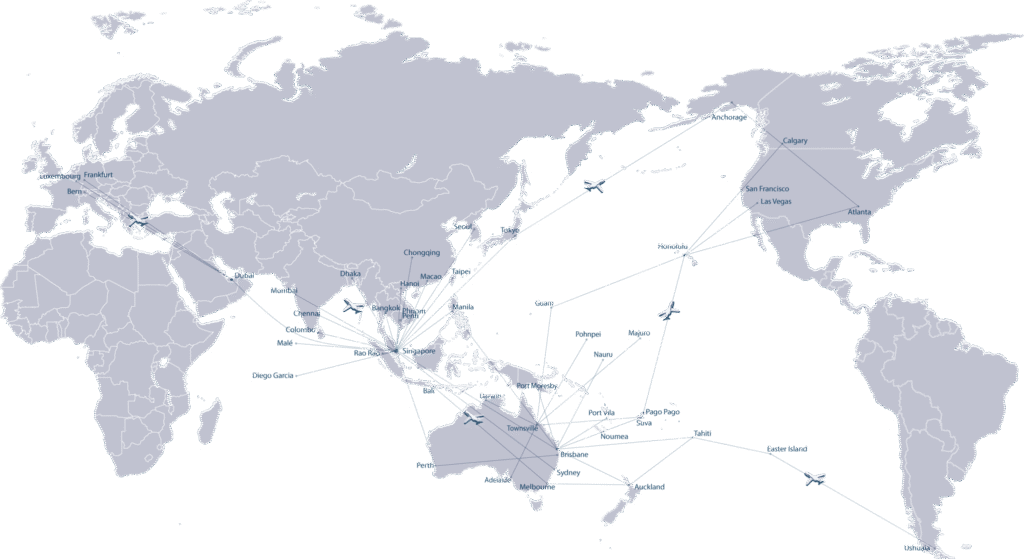
Our global reach
LifeFlight continues to expand its emergency rescue helicopter network beyond Queensland as it secures
contracts with commercial and government operators.
John Lewis
LifeFlight Commercial Chair
Commercial Success Driving Lifesaving Capability
Operational excellence enhancing our reach
Every commercial contract LifeFlight secures directly enhances our readiness to serve communities across Queensland and beyond. Revenue from commercial partnerships supports vital elements such as crew training, state-of-the-art aircraft, and cutting-edge technology, ensuring faster response times and better patient outcomes.
This year, our commercial work enabled more than 150 community emergency response hours through our Surat Gas Aeromedical Service partners, supported the Australian Defence and Border Force, ensured continuity during extreme weather events by contributing to flood and cyclone responses in NSW.
LifeFlight demonstrated its capability to manage complex long-range international missions, completing rapid back-to-back transfers across multiple countries. Crews safely transported patients with serious spinal and respiratory conditions from Tokyo to Atlanta and from Miami to Manila, supported by extensive international planning and high-level in-flight medical care. The team also deployed a specialist medical unit for the Pope’s visit to Timor-Leste, coordinating closely with global partners.
LifeFlight plans to expand its reach to new continents over the next year, leveraging enhanced capabilities.
Cosypods were introduced to support safer, thermally-controlled transfers for infants on long-range missions, complementing existing neonatal retrieval capabilities delivered by specialist teams and equipment.
Singapore
LifeFlight Singapore played host to some important developments with new doctors and flight nurses strengthening our Asia-based operation.
Growing capability
LifeFlight developed the capacity to handle multiple challenging missions backed by highly skilled teams of intensive care medics, pilots, and aeromedical coordination specialists.
Our vertically-integrated shared system core
LifeFlight’s flexible, innovative and integrated aviation system combines engineering, maintenance, coordination, and training for all personnel to deliver on our vision. Our expertise is forged on the frontline and is extended through every facet of our business.
Engineering and Maintenance
Part 145 certification, maintenance services, fleet upgrades, leasing and spare parts and technical support
Medical
Training, staffing, clinical governance, tele-medicine services and clinical research
Communications, Coordination and Control Centre
Tasking across fleets, tele-medicine coordination and multi-agency planning and drills
Air Ambulance
Aeromedical domestic and global repatriation and chartering services
Training Academy
Aeromedical training, helicopter rescue simulation and recertification services, offshore survival training, ground and safety programs
Helicopter Emergency Medical Services
Emergency aeromedical services, search and rescue, offshore operations, disaster deployments, leasing and charter services
Elevating Standards Across Every Mission
The expertise driving our service
Advanced maintenance and safety
LifeFlight’s Approved Maintenance Organisation (AMO) spent its first year in a new engineering facility at Archerfield Airport after opening in August 2024.
Named in honour of longtime supporter and philanthropist Clive Berghofer AO, the maintenance centre spans 5,000 square metres, is four times the size of the previous hangar, and can accommodate up to nine helicopters and one jet.
The facility supported engineering operations from Hobart in Tasmania for Rotor-Lift to Singapore for LifeFlight and other operators such as CapRescue.
It enabled the engineering department to shift to a 24/7 operation, ensuring best-practice aircraft maintenance and impeccable safety standards.
C3 upgrades for seamless operations
LifeFlight’s Communications, Coordination and Control Centre (C3) manages all missions and commercial deployments through a newly upgraded cloud-based system. This transition has streamlined operations, enabling faster communication and vital remote access capabilities.
The system’s value was proven during Cyclone Alfred, when the Brisbane head office evacuated to Toowoomba. In a display of true operational agility, C3 staff maintained seamless continuity by working remotely from alternative locations, including interstate and overseas, despite the severe weather.
Handling over 100,000 calls this year, the C3 team continues to meet unprecedented demand. To cater to this growth, the centre has expanded its workforce, adding four new frontline staff and specialised management roles.
Growing workforce
LifeFlight continued to grow its engineering workforce with more than 60 licensed engineers.
Apprentice engineers undergo training at the LifeFlight Clive Berghofer Maintenance Centre. Several qualified during the year to become aircraft maintenance engineers and have undertaken additional studies to obtain their CASA Part 66 licence and type endorsements.
The organisation’s commitment to a more culturally diverse and inclusive workplace was underscored by First Nations and women career advancement across various engineering roles which are traditionally male dominated.
StarFlight
StarFlight Australia is a joint venture between LifeFlight and Linfox. StarFlight’s Victoria Police (VicPol) helicopter fleet claimed top spot internationally for average flight hours per year (2024) by a Leonardo AW139 for law enforcement operations. It comes as the fleet achieved a major milestone with 15,000 airborne hours since take-off in 2020.
Crucial to its success is a team of dedicated and experienced StarFlight Victoria engineers working 24/7 to keep the helicopters serviceable, ensuring availability and reliability to Victoria Police.
“At first, LifeFlight was nothing but scary memories for our little family. But I now know that the boys cherish it as a great memory for their lives after our experience at the Sunshine Coast Gala.” - Gregg, Yarren’s father
Our community
Foundation highlights 2024-2025
$0mil
fundraised
$0
6 lotteries with a total draw of $300,000
0+
200+ community events
0
LifeFlight volunteers
0
Community projects delivered
Community generosity fuelling
our mission
Our Year in Community
Thanks to the unwavering generosity of donors, supporters and community partners, LifeFlight continued to expand its vital aeromedical services and deliver meaningful projects across Queensland.
Support surged over the year, enabling 36 community initiatives — from upgraded crew facilities in Toowoomba and Bundaberg to new medical equipment and essential base infrastructure. Appeals grew strongly too, funding important campaigns such as the night-vision goggle project, which equipped crews with 10 additional sets to strengthen night-time response capability.
LifeFlight has seen an increase in fundraising support from a diverse range of sources including bequests, appeals, lotteries, and generous contributions from community and corporate donors. This vital support means we can sustain and expand our lifesaving services across Queensland to be there when people need us most.
Appeals
Appeal revenue and regular monthly giving both grew, helping fund key initiatives such as the night-vision goggle campaign — ensuring crews are better equipped for the increasing demand for night operations.
Major projects
Strong community backing helped progress major developments such as the Sunshine Coast base fit-out and the Wall of Local Legends. Contributions also supported the new Mount Isa base, further strengthening LifeFlight’s regional footprint.
Lotteries
LifeFlight Lotteries continued their rapid growth, selling more than 260,000 tickets and attracting thousands of new supporters. The program is becoming a vital, sustainable funding source for LifeFlight’s aeromedical services.
Bequests
A record 23 bequests totalling $1.689 million highlighted the meaningful legacy left by supporters who chose to include LifeFlight in their wills. These gifts — inspired by firsthand experiences and deep community connection — will continue to save lives well into the future.
First Minutes Matter
Over the past year, LifeFlight’s First Minutes Matter program has continued to equip Queenslanders with the skills and confidence to save lives in the vital moments before professional help arrives.
Building on this mission, the free emergency trauma training workshop and online course empowers participants to become the critical link in the chain of emergency care, providing vital assistance to an injured or seriously ill person until medical professionals take over.
In the last financial year LifeFlight's medical educators travelled across the state to more than 100 locations, delivering upwards of 90 workshops and trained close to 800 Queenslanders.
“I’m super grateful to my first responders. I wouldn’t be here without their quick thinking. I’m very grateful they pulled it together all as one group.” - LifeFlight patient, Zach Nightingale
Thank You to our supporters
LifeFlight’s partnerships have been driving positive impact for the past 46 years.
Through our partnership with the Australian Maritime Safety Authority, we continued to provide 24/7 maritime telemedicine clinical advice, delivering specialist medical support to vessels in distress across vast and remote areas of Australian waters.
Strategic partnerships, including with Leonardo and Linfox, have delivered new aircraft, investment in advancing training simulators, and enhanced maintenance capabilities. These investments reduce downtime, increase aircraft availability, and ensure our crews are trained to the highest standards. Ultimately, our commercial success strengthens our capacity to deliver critical aeromedical services when communities need them most.
StarFlight
For every flying hour, five hours of engineering manpower is required by the team who work on various aspects of helicopter engineering including structural, mechanical and avionics.
The aircraft are fitted with advanced infrared cameras and mapping systems, as well as object detection software, which assists with marine and land-based searches.
The milestone further demonstrated the company’s commitment to keeping Victorians safe.
StarFlight Victoria supports VicPol as world leaders in surveillance aviation and aeromedicine and the achievement is testament to the commitment of the crews who work to ensure excellence across the fleet.
More than 100,000 engineering hours have been clocked up, including 53 heavy maintenance inspections, 57,000 work cards and 11 modification requests.